Acne Care · Central Oregon
Teen Acne: When to See a Dermatologist in Bend (and What to Expect)
Almost every teenager gets acne, but that doesn't mean they should have to wait it out. Early, dermatologist-led treatment clears skin faster and protects young skin from the marks and scars acne can leave behind.
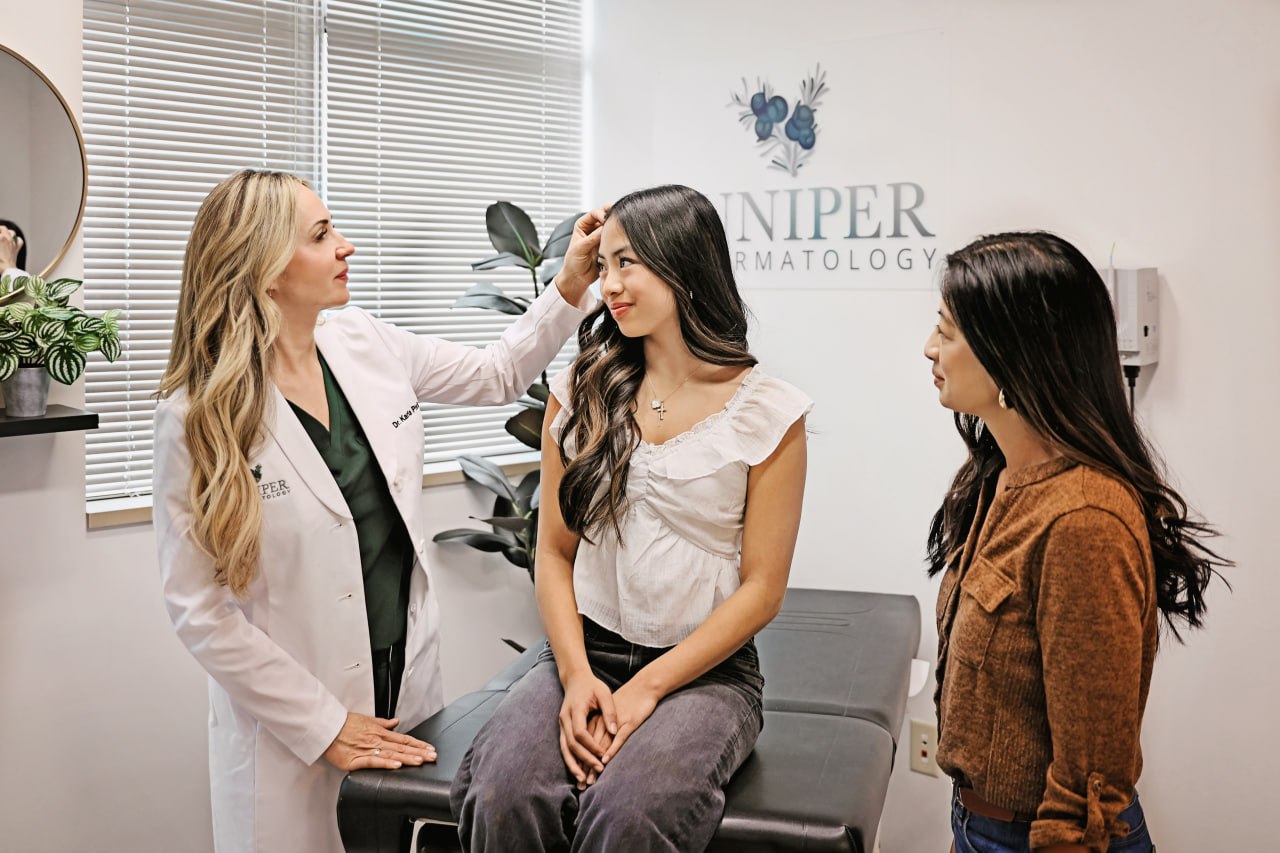
Acne is the most common skin condition in the United States, and roughly eight in ten teens experience it. That makes it "normal" — but it isn't something a teenager should simply have to tolerate. Acne affects confidence, and when it's moderate or severe, it can leave permanent scars that are far harder to treat later than to prevent now.
Why timing matters for teen acne
Treating acne early does two things at once: it clears the breakouts sooner, and it reduces the risk of the dark marks and pitted scars that deep or repeated inflammation can leave. Prevention is genuinely better than treatment when it comes to scarring.
When to see a dermatologist
Teens don't have to try every drugstore product first. It's reasonable to see a dermatologist when:
- Breakouts are moderate or severe — widespread, inflamed, or covering large areas.
- Acne is deep or painful — deep nodules and cysts carry the highest scarring risk.
- Over-the-counter treatment hasn't helped after about two to three months of consistent use.
- Scarring or marks are appearing — treating early is the best chance to limit them.
- Acne is affecting confidence or mood — that impact is real and worth addressing.
What teen acne treatment looks like
Treatment is built around the teen's type of acne, skin, and routine — and around what a busy teenager will actually stick with. Most plans combine:
- A prescription topical retinoid — the backbone of care, keeping pores from clogging.
- An antimicrobial — benzoyl peroxide or a short course of oral antibiotics to reduce bacteria and inflammation.
- A simple, realistic routine — gentle cleansing, moisturizer, and daily sunscreen your teen can keep up with.
- In-office care when needed — peels or cortisone injections to calm stubborn or painful spots quickly.
- Hormonal options — for young women whose pattern points to hormones.
Early results usually appear in four to six weeks, with bigger changes by eight to twelve weeks. Because progress is gradual, we use before-and-after photos to show teens — who sometimes feel nothing is working — just how far their skin has come.
A note for parents
Teen acne is not a hygiene problem or a failure of willpower, and it isn't caused by chocolate or by not washing enough. It's a medical condition with a hormonal and genetic basis — and it responds best to medical treatment rather than blame. If you'd like to bring your teen in, our team sees patients across Central Oregon, and we make visits straightforward and low-stress. Learn more about acne treatment at Juniper Dermatology.
Frequently asked questions
At what age should a teen see a dermatologist for acne?
There's no fixed age — it's about the acne, not the birthday. It's reasonable to come in once acne is moderate or severe, deep or painful, not improving after two to three months of over-the-counter care, or leaving marks. Earlier is better when scarring is a risk.
Is teen acne caused by diet or poor hygiene?
No. Acne has a hormonal and genetic basis; it isn't caused by dirty skin or by chocolate alone. Good, gentle skincare supports treatment, but acne is a medical condition that responds best to medical care.
Are acne treatments safe for teenagers?
Yes — the standard treatments are widely used and well studied in teens. A dermatologist selects the right options for a young patient's skin and health and monitors progress, adjusting as needed.
Can teen acne leave scars?
It can, especially with deep nodules and cysts — which is exactly why early treatment matters. Controlling acne early is the single best way to prevent the marks and scars it can leave behind.
Do you treat teen acne at Juniper Dermatology?
Yes. Acne is one of the most common conditions we treat, and we care for teens and young adults across Bend, Redmond, and Central Oregon.
Sources & further reading
This article is patient-education information reviewed by a board-certified dermatologist. It is general information, not medical advice, and is not a substitute for an in-person evaluation. For concerns about your skin or hair, please see a qualified clinician.