Acne scars
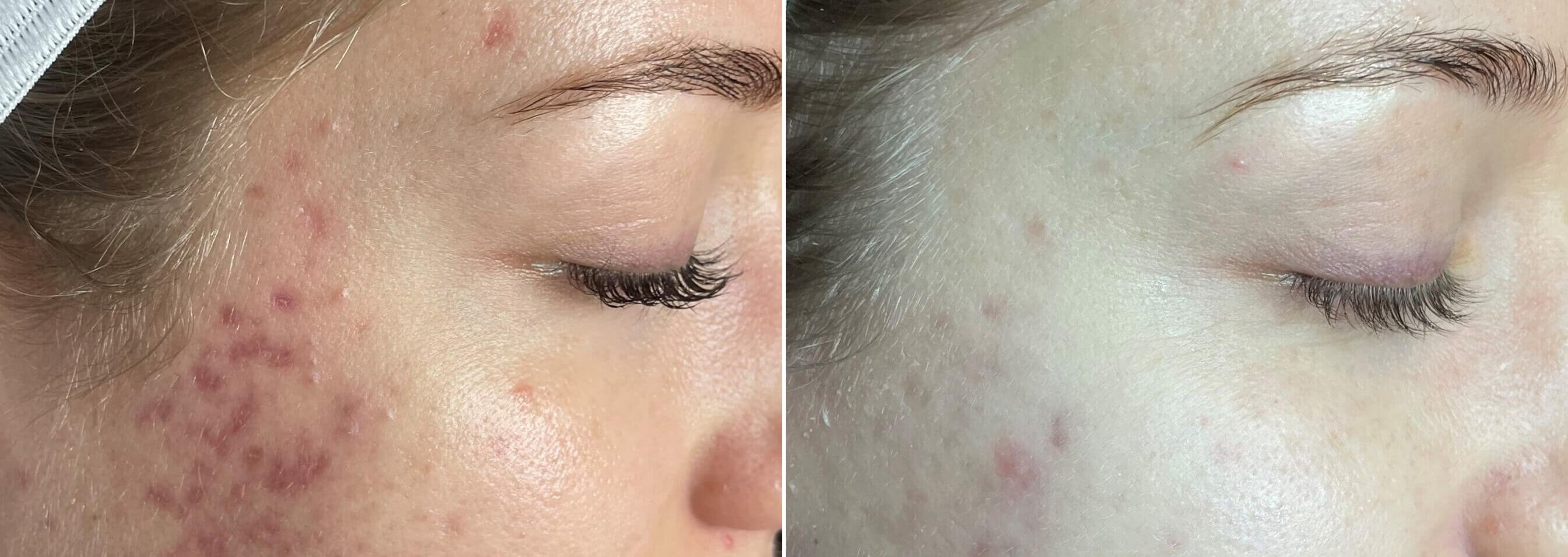
Softens shallow and rolling scarring over a series as collagen rebuilds.
Collagen Induction Therapy · Bend
Microneedling with the SkinPen® — the first FDA-cleared microneedling device — uses precise micro-channels to trigger your skin's own collagen and rebuild smoother, firmer, more even skin.
Before & after
Representative clinical results from the device manufacturer. Individual results vary; your plan is tailored during your visit.
Overview
Microneedling, also called collagen induction therapy, uses a sterile, single-use cartridge of fine needles to create thousands of microscopic channels in the skin. That controlled micro-injury prompts the skin's natural repair response, laying down fresh collagen and elastin over the following weeks — the foundation of smoother texture, softened scars, finer lines and a more even tone.
We perform microneedling with the SkinPen®, the first microneedling device cleared by the FDA. Its sterile, single-use needle cartridge and precisely adjustable depth let us treat the right layer for your skin and your concern — from a gentle surface refresh to a more corrective pass for acne scarring.
Because it works mechanically rather than with heat or light, microneedling suits a wide range of skin types and tones. It is typically planned as a short series spaced a few weeks apart, and it layers beautifully with PRP, growth factors and other treatments as part of a broader plan.
A closer look
Microneedling is collagen induction therapy: a device glides fine needles across the skin to create thousands of controlled micro-channels. Those tiny injuries are safe and deliberate — they trigger your skin’s own repair response, which lays down fresh collagen and elastin over the following weeks. That is what smooths texture, softens scars, refines pores, and restores a firmer, more even complexion.
Patients often search for it by brand name. SkinPen® is the device we use at Juniper — the first microneedling device cleared by the FDA — with a sterile, single-use cartridge and an adjustable depth so treatment is matched to your skin rather than run at one fixed setting.
Microneedling is one of the most versatile treatments in dermatology because it improves the quality of the skin itself. It is commonly used for acne scars and rolling or shallow scarring, fine lines and wrinkles, enlarged pores, rough or uneven texture, dullness, and early skin laxity. It also helps your skincare absorb more effectively afterward, which is why it pairs so well with other treatments.
Because it works mechanically — not with heat or light — it is generally well tolerated across a wide range of skin tones and types, including many patients who are not ideal candidates for aggressive lasers.
Classic microneedling (what we do with SkinPen) creates micro-channels that stimulate collagen — ideal for surface texture, pores, fine lines, and mild scarring with minimal downtime. RF microneedling (our Pixel8 and Agnes RF) adds radiofrequency energy at depth, so it also tightens and reaches deeper scars. Lasers use light and heat for more dramatic resurfacing of sun damage and deeper texture, with more recovery, suiting candidates for CO2 or erbium resurfacing. Chemical peels exfoliate chemically for tone and superficial texture.
None of these is universally better — they solve different problems. A dermatologist chooses, or layers, the right one for your skin, which is why the same person can be steered differently at different stages of a plan.
Microneedling is often paired with growth factors or your own platelet-rich plasma (PRP) — the “vampire facial.” The logic is simple: the micro-channels are the delivery route, and the serum is what you put into it. Growth factors support the repair response, while PRP brings your own regenerative plasma to the surface. Both can amplify results for texture, tone, and scarring.
You can read more on our PRP & vampire facial page, and your dermatologist will tell you whether adding growth factors or PRP makes sense for your goals — or whether microneedling alone is plenty.
Scarring is where microneedling earns its reputation. Controlled micro-injury remodels collagen beneath rolling and shallow scars, softening their edges and blending them with surrounding skin over a series of treatments. Deeper, tethered, or icepick scars may respond better to RF microneedling, subcision, or resurfacing — sometimes in combination.
Because scarring is medical, not cosmetic-only, we assess the type of scar before choosing the tool. That diagnosis is the difference between a hopeful guess and a real plan. See our acne scar & texture approach.
A microneedling appointment takes about 45–60 minutes. Topical numbing keeps it comfortable. Expect a sunburn-like redness and warmth for roughly a day or two, sometimes with light flaking as the skin renews, and most patients are back to their routines quickly.
Results build rather than appear overnight. Most patients do a series of about three sessions spaced four to six weeks apart, with collagen continuing to improve for months afterward, then periodic maintenance. Because the change comes from your own repair process, it looks natural. Individual results vary.
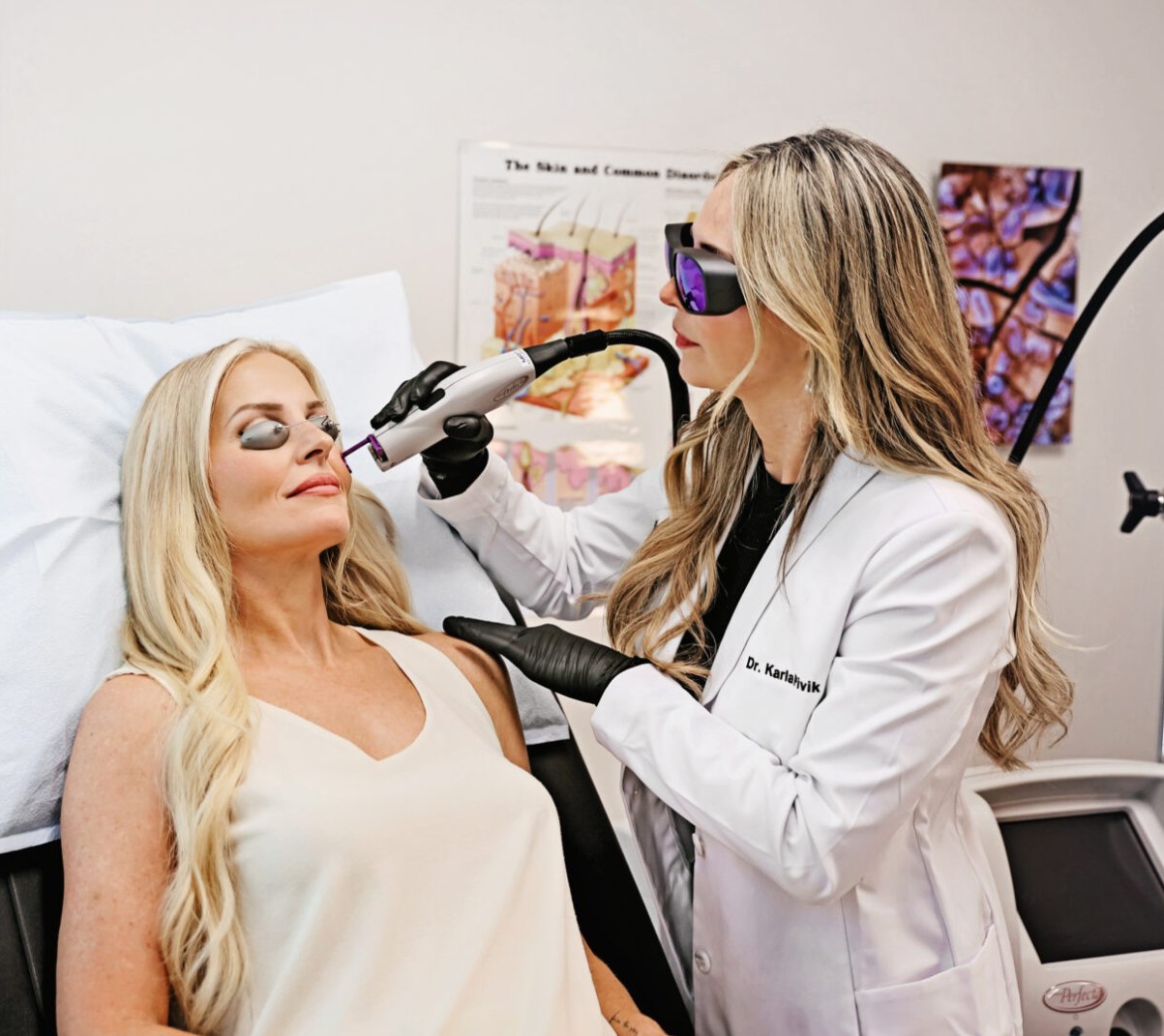
Microneedling looks simple and is not. Needle depth, technique, cartridge sterility, and what is applied into the micro-channels all affect safety and results — and skin that needs a different treatment can be harmed by the wrong one. At Juniper in Bend, microneedling is delivered under the direction of board-certified dermatologist Karla Snider Pivik, DO, FAAD, FAOCD, who confirms candidacy, sets the depth for your concern, and sequences it correctly alongside lasers, peels, and injectables.
We welcome patients from Bend, Redmond, and throughout Central Oregon. If you are comparing microneedling near you, the right question is not only which device — it is who is reading your skin.
What to expect
Expect a sunburn-like redness and warmth for roughly a day or two, sometimes with light flaking as the skin renews. Most patients are back to normal routines quickly.
Collagen remodeling continues for weeks after each session, so texture, tone and firmness keep improving across your series rather than all at once.
What it treats
Softens shallow and rolling scarring over a series as collagen rebuilds.
Smooths early lines and crepey texture.
Refines pore appearance as collagen thickens the skin.
Evens roughness and restores a healthier surface.
Supports firmer, more resilient skin over time.
Why patients choose it
Performed with the SkinPen®, the first FDA-cleared microneedling device.
Single-use cartridge with depth adjusted to your skin.
Mechanical, not heat- or light-based — generally well suited across skin types.
Pairs with PRP, growth factors, lasers and skincare in a broader plan.
Investment & financing
Microneedling is planned as a short series and priced per session. We'll recommend the number of treatments and cadence for your texture, tone and scar goals at your visit.
Exact pricing is personalized to your plan and confirmed at your visit. We accept major cards and offer CareCredit financing.
Why a dermatologist
Needle depth, technique and what is applied into fresh micro-channels all shape safety and results. A dermatology-led team selects the appropriate depth and serums for your skin, maintains sterile technique, and sequences microneedling safely alongside your other treatments.
Call or text 541-585-7546Common questions
SkinPen® is the FDA-cleared microneedling device we use; microneedling (collagen induction therapy) is the treatment itself. Using a cleared device with a sterile, single-use cartridge is a meaningful standard-of-care detail.
Most patients see the best results from a series of about three treatments spaced four to six weeks apart, with periodic maintenance afterward. The exact number depends on your concern and goals.
Yes — because it works mechanically rather than with heat or light, microneedling is generally safe across a wide range of skin types and tones. Your dermatologist confirms the right approach for your skin.
Most patients have a day or two of redness that feels like mild sunburn, sometimes with light flaking. Makeup resumes after 24 hours, and many return to work the next day.
Both use fine needles, but RF microneedling adds radiofrequency energy to tighten and remodel more deeply. SkinPen microneedling is our core collagen-induction treatment; we'll recommend the right option — or a combination — for your goals.
SkinPen is the FDA-cleared microneedling device we use; microneedling, also called collagen induction therapy, is the treatment itself. Using a cleared device with a sterile, single-use cartridge is a meaningful standard-of-care detail.
Most patients see the best results from a series of about three treatments spaced four to six weeks apart, with periodic maintenance afterward. The exact number depends on your concern and goals.
Microneedling is priced per session and planned as a short series; the number of treatments and the cadence are recommended for your goals at your visit. Exact pricing is personalized and confirmed in person, and CareCredit financing is available.
Yes. Because it works mechanically rather than with heat or light, microneedling is generally safe across a wide range of skin types and tones. Your dermatologist confirms the right approach for your skin.
If your goals are surface texture, pores, and glow, microneedling with the SkinPen is often ideal. If you also want skin tightening or improvement of deeper scars, RF microneedling adds radiofrequency at depth. Your dermatologist recommends the right option, or a combination, for your goals.
Yes. PRP (the vampire facial) and growth-factor serums are applied as microneedling drives them into the skin, amplifying the regenerative response. Your dermatologist will advise whether adding them suits your goals.
Expect redness and a mild sunburn-like feeling for a day or two, sometimes with light flaking. Makeup can resume after 24 hours and most patients return to normal activities quickly with sun protection.
Yes. It is a mainstay for rolling and shallow acne scarring, remodeling collagen beneath the scar over a series. Deeper or tethered scars may need RF microneedling, subcision, or resurfacing, sometimes combined. We assess the scar type before choosing.
Bend · Central Oregon
Dermatologist-led aesthetic care in Bend. No pressure — just an expert plan built around you.