Persistent flushing
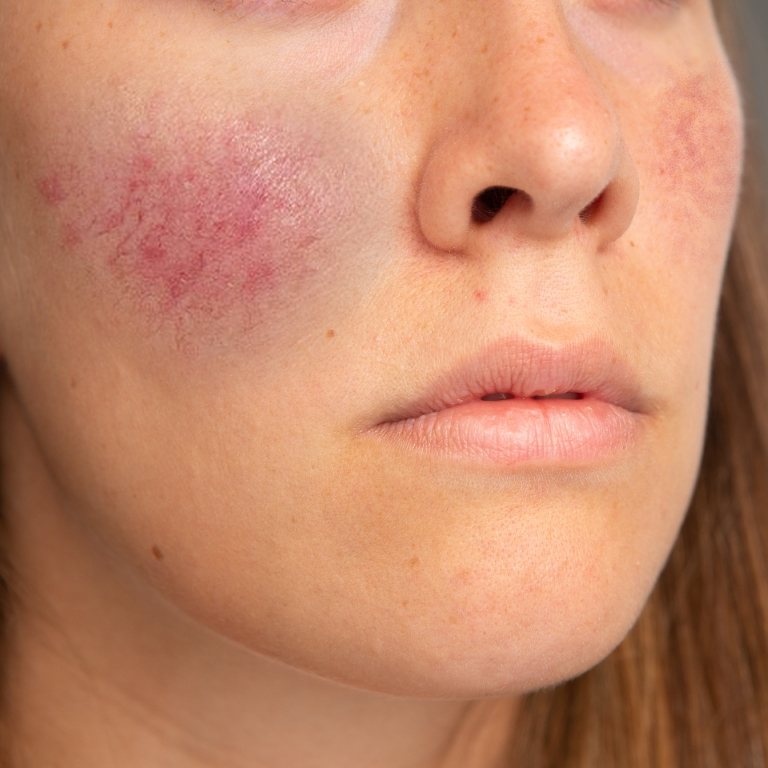
Redness across the central face that lingers rather than fading.
Medical Dermatology
Rosacea is a chronic condition, but it's very manageable. The goal is calmer, more even skin - and a plan that keeps flare-ups from running your day.
✓ Medically reviewed by Dr. Karla Snider Pivik, DO, FAAD, FAOCD — board-certified dermatologist
Overview
Rosacea often shows up as persistent redness across the cheeks, nose, chin, and forehead - sometimes with visible vessels, bumps, or a stinging, sensitive feeling. It's frequently mistaken for acne or simply 'sensitive skin.'
Lasting control comes from combining the right medical treatment with a routine built around your specific triggers - so we treat the whole person, not just the redness of the moment.
Learn more about the lasers behind our Redness Reset - VBeam® pulsed-dye laser and IPL photofacial - the same technology, guided by the dermatologist managing your rosacea.
What rosacea can look like
Redness across the central face that lingers rather than fading.
Fine, thread-like vessels (telangiectasia) on the cheeks and nose.
Acne-like breakouts without the blackheads of true acne.
Burning, tightness, or reactivity to products and weather.
Dry, irritated, gritty eyes (ocular rosacea) that often go undiagnosed.
How we treat it
Rosacea responds well to a layered approach - settle the inflammation, treat the redness, and protect against triggers.
Medications such as metronidazole, azelaic acid, and ivermectin to calm bumps and redness.
Low-dose anti-inflammatory antibiotics for more stubborn, bumpy rosacea.
Pulsed-dye laser that targets persistent redness and visible blood vessels.
Intense pulsed light to even out background redness and flushing over a series of sessions.
We help you pinpoint personal triggers - sun, heat, stress, foods - to prevent flares.
A simple, barrier-friendly routine with daily broad-spectrum SPF to hold your results.
When to see a dermatologist
If redness is persistent, worsening, or 'sensitive skin' products only make things worse, a dermatologist can confirm rosacea and get it under control.
Schedule with JuniperCommon questions
Most patients notice initial improvement within 2-4 weeks of starting treatment. Visible blood vessels typically respond to laser therapy within 1-3 sessions, while redness and breakouts often improve within the first month of prescribed medication. Long-term management is key for lasting results.
Common triggers include sun exposure, stress, spicy foods, hot beverages, alcohol, and extreme temperatures. During your visit we help you identify your personal triggers so you can prevent future flare-ups.
Yes. Ocular rosacea causes dry, gritty, irritated eyes and often goes undiagnosed. We evaluate for it and coordinate care when needed.
Bend & Redmond · Central Oregon
Board-certified dermatology with same-week appointments — because no one should have to wait for expert care.