Face & neck
Upper lip, chin, jawline, sideburns, and selected neck areas.
810 nm Diode Hair Reduction · Bend flagship location
Spend less time shaving, waxing, and managing irritation. Juniper's dermatologist-led Bend Laser Center uses the Rohrer Spectrum's dedicated 810 nm diode handpiece for progressive, long-term hair reduction across common face and body areas.
Available exclusively at our Bend flagship location.
Choose Aesthetics & Laser in our secure Bend scheduler. We will confirm the treatment area, candidacy, and plan before treatment.
Reviewed October 9, 2026 by Karla Snider Pivik, DO, FAAD, FAOCD, board-certified dermatologist and founder.
The short answer
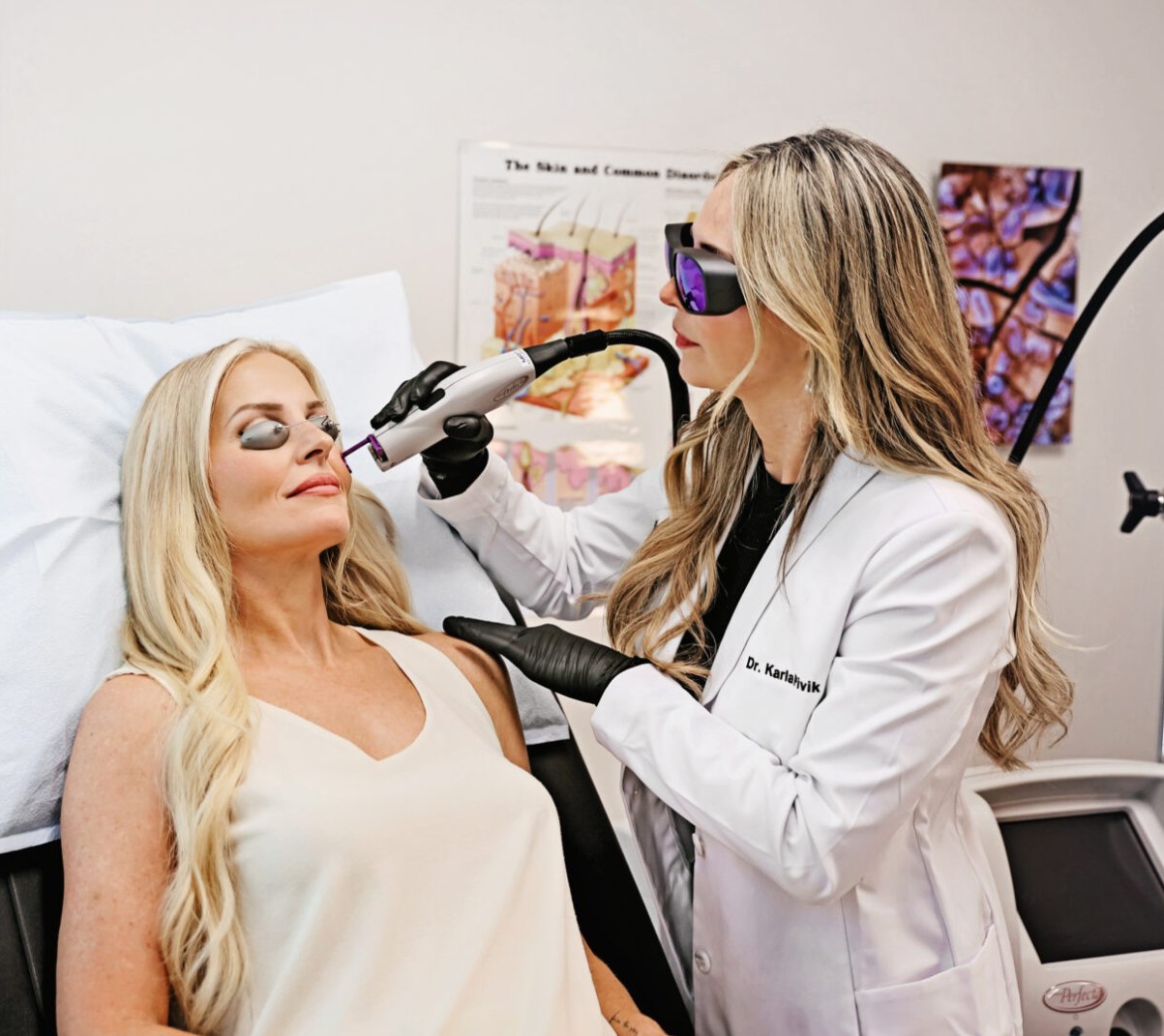
Juniper uses the Rohrer Spectrum’s dedicated 810 nm diode handpiece for hair reduction. Dark, coarse hair generally responds best; white, gray, red and very light blonde hair often lacks enough pigment to respond well. Because follicles grow in cycles, a series is needed and maintenance may be useful.
Before & after
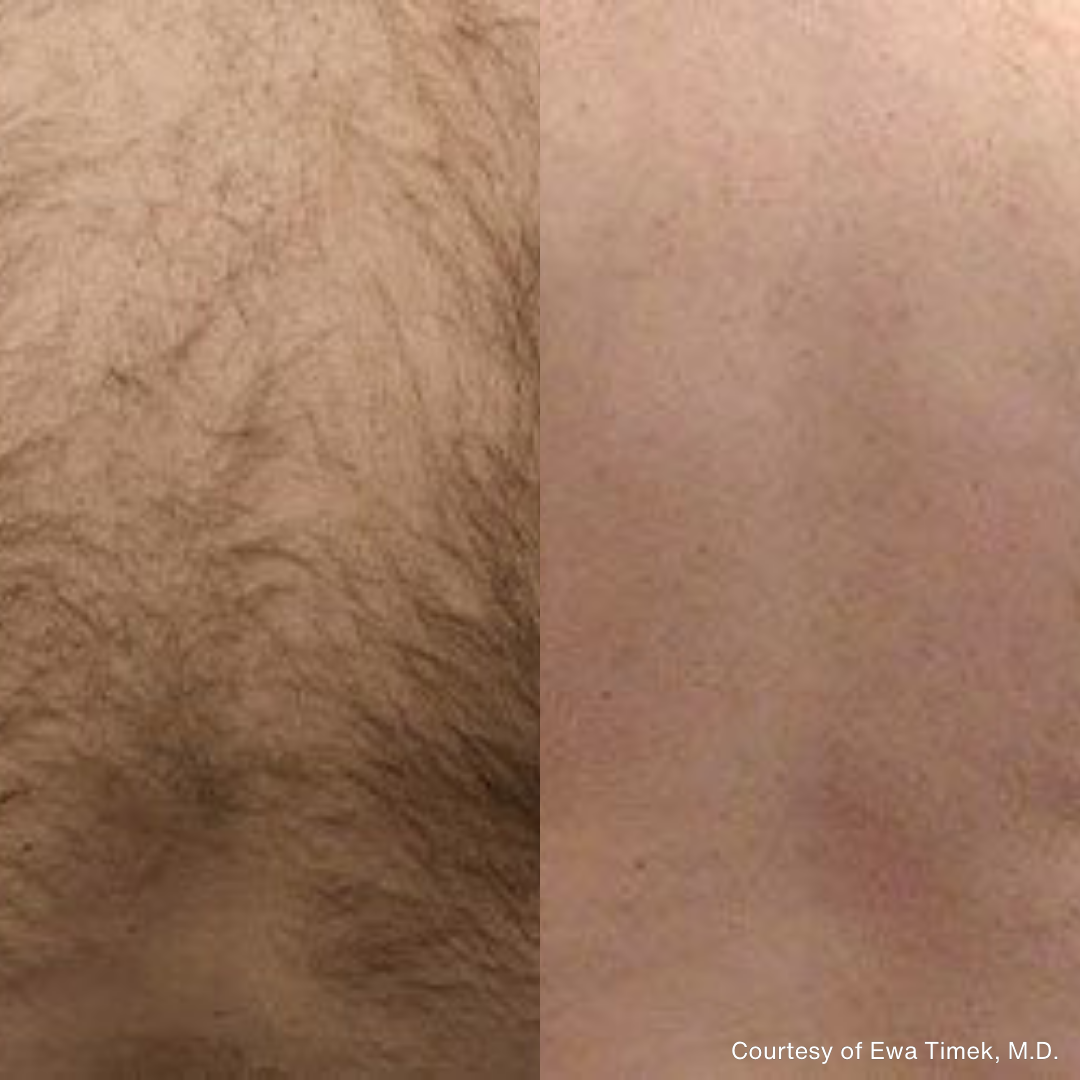
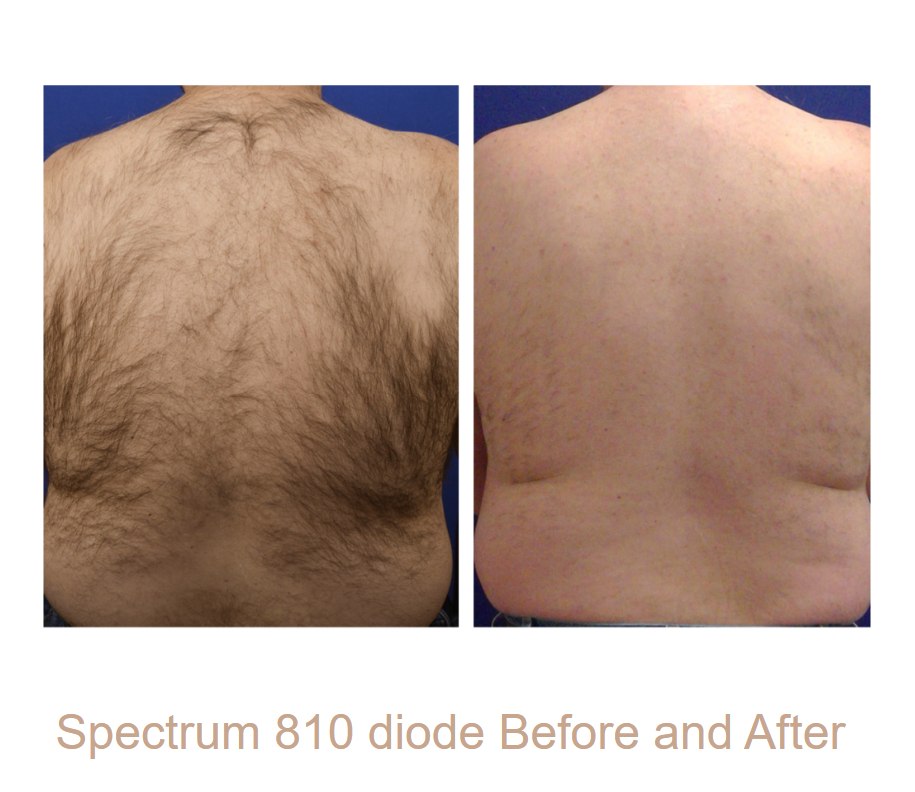
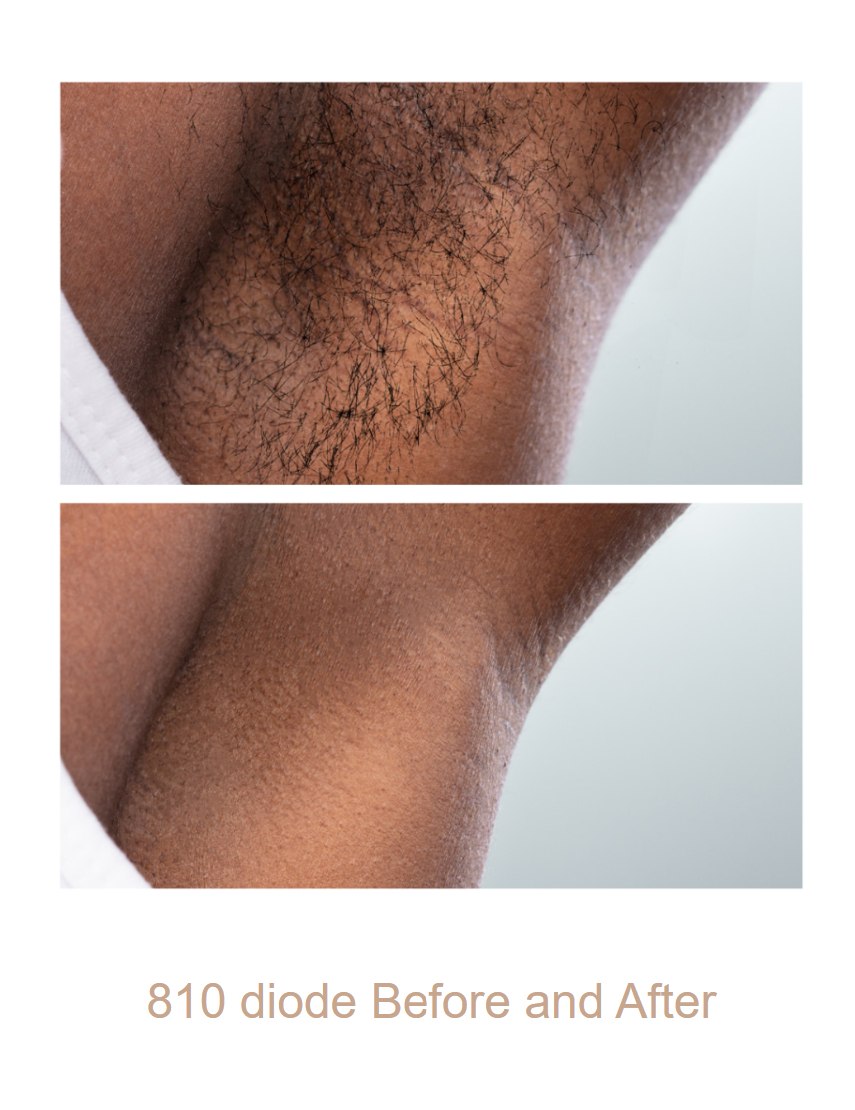
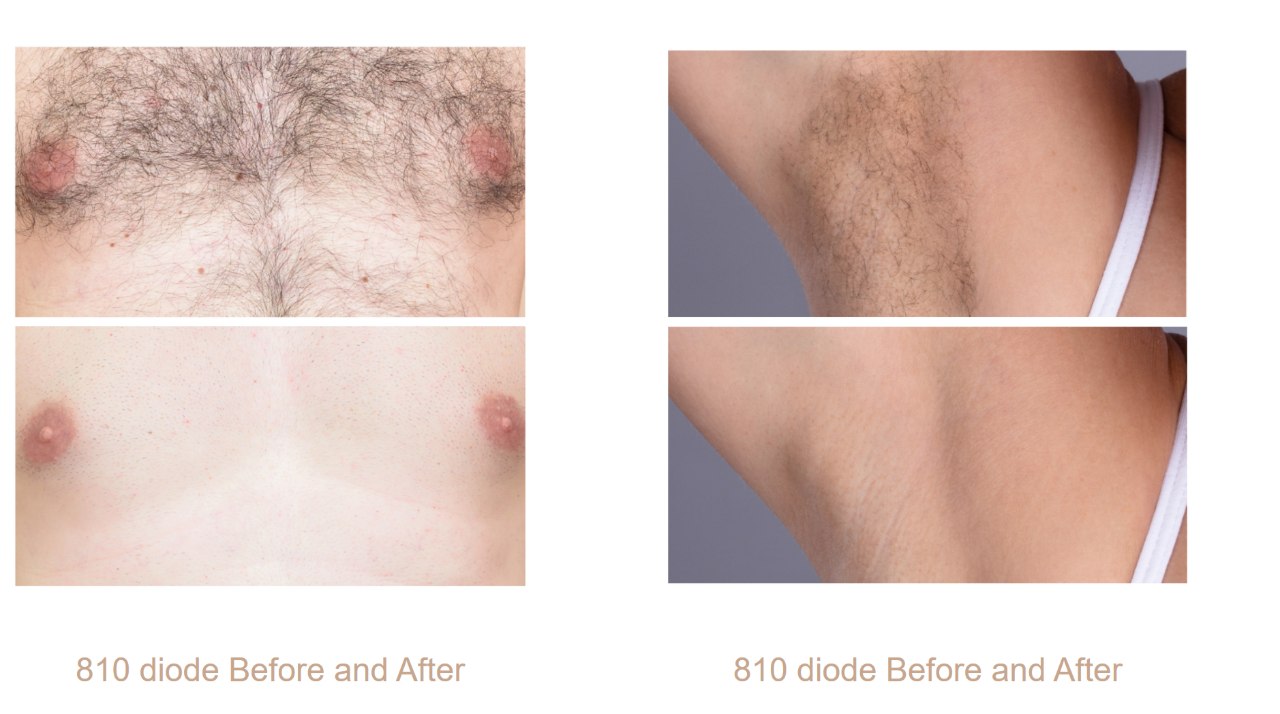
Representative clinical results from the device manufacturer. Individual results vary; your plan is tailored during your visit.
Part of Juniper’s Bend Laser Center
See how resurfacing, vascular, pigment, tattoo, hair-reduction, and related energy treatments differ in targets, downtime, and skin-tone considerations. Treatments are performed at our Bend flagship; we welcome patients from Redmond and across Central Oregon.
Overview
Laser hair removal works by directing light into pigment in the hair follicle. The follicle absorbs that energy during its active growth phase, reducing its ability to produce new hair while appropriate settings and contact cooling help protect the surrounding skin.
The Spectrum is a multi-platform laser system. For hair reduction, we use its dedicated 810 nm diode handpiece. The platform's separate Q-switched 1064 and 532 nm handpieces expand what the Laser Center can address, including selected tattoo and pigment concerns, but the diode is the hair-removal technology. That distinction lets us match the correct handpiece and settings to the actual treatment goal.
Because hair grows in cycles, one appointment cannot reach every follicle. A planned series treats new active-growth hairs as they emerge, producing progressively finer, sparser regrowth. Maintenance may be useful over time, especially in hormonally influenced areas.
A closer look
Laser hair removal works best when the hair contains enough dark pigment for the laser to distinguish it from surrounding skin. Coarse brown or black hair usually responds more predictably than fine hair. White, gray, red, and very light blonde hair often responds poorly because it contains too little target pigment; electrolysis may be a better option for individual light hairs.
Skin tone matters, but it is only one part of candidacy. Recent tanning, self-tanner, medications, active irritation, the treatment area, and hair thickness all influence settings and timing. Juniper evaluates those factors before recommending a series rather than describing one protocol as appropriate for everyone.
A series is needed because the diode can most effectively target hairs during their active growth phase, and only a portion of follicles are active at one time. The exact number and spacing vary by body area, hair density, hormones, skin response, and treatment history. Body areas and hormonally influenced facial areas may follow different schedules.
Treated hairs shed gradually during the weeks after a visit. Each session addresses another group of active follicles, so regrowth typically becomes progressively sparser and finer. Maintenance may be useful, particularly on the face or when hormones continue to stimulate new growth.
Waxing and plucking remove hair temporarily but leave the follicle capable of producing another hair. Laser treatment directs light into pigment in the follicle to reduce future growth. Unlike waxing, it requires shaving rather than pulling hair out between sessions so the follicle remains available to target.
IPL uses a broad spectrum of light, while Juniper uses the Spectrum’s dedicated 810 nm diode handpiece for hair reduction. Electrolysis treats follicles individually and can be useful for light hairs that lack enough pigment for laser. The right choice depends on hair color, area size, skin characteristics, and the desired tradeoff between speed and permanence.
Laser can reduce coarse facial hair, but hormones can continue to activate previously dormant follicles. Chin and jawline hair may therefore need more sessions or periodic maintenance than a stable body area. Sudden or increasing facial hair, irregular periods, acne, or scalp hair changes may warrant medical evaluation rather than cosmetic treatment alone.
Because Juniper is a full dermatology practice, the team can distinguish routine unwanted hair from a pattern that deserves additional clinical attention. Laser may still be part of the plan, but expectations should account for the underlying driver.
Expected short-term effects include warmth, redness, and small follicle-centered bumps. Less common risks include blistering, burns, crusting, infection, scarring, or temporary or lasting pigment change. Rarely, laser treatment can stimulate rather than reduce hair growth in or near a treated area. Appropriate candidacy, conservative settings, and careful aftercare help lower risk.
Treatment may need to be postponed for a recent tan or sunburn, self-tanner, active rash or infection, open skin, or medications that change light sensitivity or healing. Tell us about prescription and over-the-counter medicines, pregnancy, prior reactions to light-based treatment, cold sores, and any tattoo, permanent makeup, or changing mole in the treatment field. Lasers should not pass over tattoo pigment, and suspicious lesions should be examined before cosmetic treatment.
Avoid waxing, plucking, threading, or electrolysis before treatment because the follicle needs to remain present. Shave as directed, arrive with clean skin, and avoid sunless tanner and unnecessary sun exposure. Your treatment plan may be adjusted if the area is recently tanned or irritated.
After treatment, use gentle skincare and sun protection. Avoid intense heat, hot tubs, and vigorous exercise until warmth and redness settle. Follow the individualized instructions you receive for deodorant, retinoids, acids, and other potentially irritating products on the treated area.
What to expect
Temporary redness, warmth, or small follicle-centered bumps can occur after treatment and usually settle quickly. Most patients return to normal daily activities right away.
Treated hairs shed gradually rather than disappearing in the treatment room. Between visits, shave if needed, but avoid waxing, plucking, or threading so the follicle remains available for the next session.
Laser hair removal areas
Upper lip, chin, jawline, sideburns, and selected neck areas.
A quick, high-value area for reducing daily shaving and irritation.
Customized to the area and degree of reduction you want, with clear boundaries agreed before treatment.
Treat lower legs, full legs, forearms, or larger limb areas.
Efficient reduction across broader body areas for women and men, alone or in a multi-area plan.
Reducing coarse regrowth may also reduce shaving-related bumps and irritation.
Why patients choose it
Progressively less hair and finer regrowth after a completed series.
Spend less time shaving, waxing, or planning around regrowth.
Less visible stubble and fewer shaving-related bumps in appropriate candidates.
A dedicated 810 nm diode handpiece rather than a one-device-does-everything claim.
Treatment parameters selected for your hair, skin, body area, and recent sun exposure.
Medical skin expertise guides candidacy, safety, and management of unexpected reactions.
Investment & financing
Laser hair removal cost depends on the size of the treatment area, hair density, and the number of sessions in the plan. A small facial area is different from full legs or a back. We confirm candidacy, the likely series, and exact pricing before treatment. Call or text 541.585.7546 if you want pricing for a specific area before scheduling.
Exact pricing is personalized to your plan and confirmed at your visit. We accept major cards and offer CareCredit financing.
Why a dermatologist
Hair reduction is still a laser-on-skin procedure. Skin tone, hair pigment, medications, hormonal patterns, recent tanning, and the body area all affect treatment choices. Juniper's dermatologist-led team evaluates those variables, chooses the appropriate Spectrum handpiece and settings, and distinguishes routine unwanted hair from hair growth that may merit medical evaluation.
Call or text 541-585-7546Common questions
Most people need a series because the laser is most effective when hairs are in the active growth phase, and not every follicle is active at once. The number and spacing depend on the treatment area, hair density and color, skin type, hormones, and response. We give you a personalized plan rather than promising a fixed number.
Laser treatment is best described as long-term hair reduction. Many treated follicles stop producing hair, while remaining or hormonally stimulated hairs may become finer or return over time. Occasional maintenance can help preserve the result.
Juniper uses the Rohrer Spectrum's dedicated 810 nm diode handpiece for hair reduction. The Spectrum also includes separate Q-switched 1064 and 532 nm capabilities for other laser indications; those Q-switched wavelengths are not the hair-removal handpiece.
Most patients describe brief warmth or a snapping sensation. The Spectrum diode uses contact cooling, and treatment settings are adjusted to the area and your skin response.
Shave the area as directed before treatment, but do not wax, pluck, or thread because the follicle needs to remain in place. Avoid tanning and self-tanner, and tell us about medications, recent sun exposure, and any skin irritation in the treatment area.
Laser energy depends on pigment in the hair. Darker, coarser hair generally responds best, while blonde, red, gray, and white hair may respond poorly because there is less pigment for the laser to target. We assess your hair and skin before recommending a series.
Yes. We welcome women and men for facial and body hair reduction, including underarms, bikini areas, legs, arms, chest, abdomen, shoulders, and back. Treatment is customized to the areas and degree of reduction you want.
Brazilian and bikini-area hair reduction can be included when clinically appropriate. Before treatment, we confirm the exact area and boundaries you want treated, review candidacy, and explain preparation and aftercare.
We can plan multiple face or body areas in the same treatment series when appropriate. Appointment length and cost depend on the number and size of the areas, so we confirm the plan before treatment rather than treating full body as one fixed package.
Cost depends on the treatment area's size, hair density, and the number of sessions in the plan. A small facial area is different from full legs or a back. Juniper confirms candidacy, the likely series, and exact pricing before treatment. Call or text 541.585.7546 if you want pricing for a specific area before scheduling.
Pricing structures vary by practice. At Juniper, exact pricing is based on the treatment area and recommended series and is confirmed before treatment, so you can understand the expected investment rather than relying on a one-size-fits-all number.
The medically accurate description is long-term or permanent hair reduction, not a guarantee that every hair is permanently removed. Many treated follicles stop producing hair, while some hair may return finer or new hormonally stimulated follicles may appear. Maintenance can help preserve the result.
Reducing coarse regrowth can reduce the shaving and follicle irritation that contribute to ingrown hairs and pseudofolliculitis in appropriate candidates. Active infection, inflamed bumps, or another rash should be assessed before treatment.
No. Hair-removal laser energy should not be delivered over tattoo pigment or permanent makeup because pigment may absorb the energy and cause injury or color change. The team identifies and avoids ink in the treatment field.
Yes, shave as directed before the appointment. Do not wax, pluck, thread, or use electrolysis between sessions, because those methods remove the follicle target. We will tell you how close to the visit to shave based on the area and your skin.
It is usually best to avoid vigorous exercise, hot tubs, saunas, and other intense heat until post-treatment warmth and redness settle. Friction and heat can add irritation. Follow the instructions given for your specific treatment area.
Laser hair removal is offered at Juniper Dermatology's Bend flagship at 2450 NE Mary Rose Place, Suite 201, Bend, Oregon 97701. We welcome patients from Redmond and throughout Central Oregon.
There is no single best device or clinic for every person. Look for accurate candidacy assessment, transparent expectations, a device matched to your hair and skin, clear preparation and aftercare, and access to medical expertise if a reaction occurs. Juniper uses a dedicated Spectrum 810 nm diode within a dermatologist-led laser center.
Clinical references
Bend flagship · Central Oregon
Choose Aesthetics & Laser in our secure scheduler. We will confirm the area, candidacy, likely series and exact pricing before treatment.