Early jowls
Mild sagging along the jawline lifted and repositioned.
Thread Lift · Bend
Dissolvable threads that subtly lift and reposition — while stimulating fresh collagen along the way.
Before & after
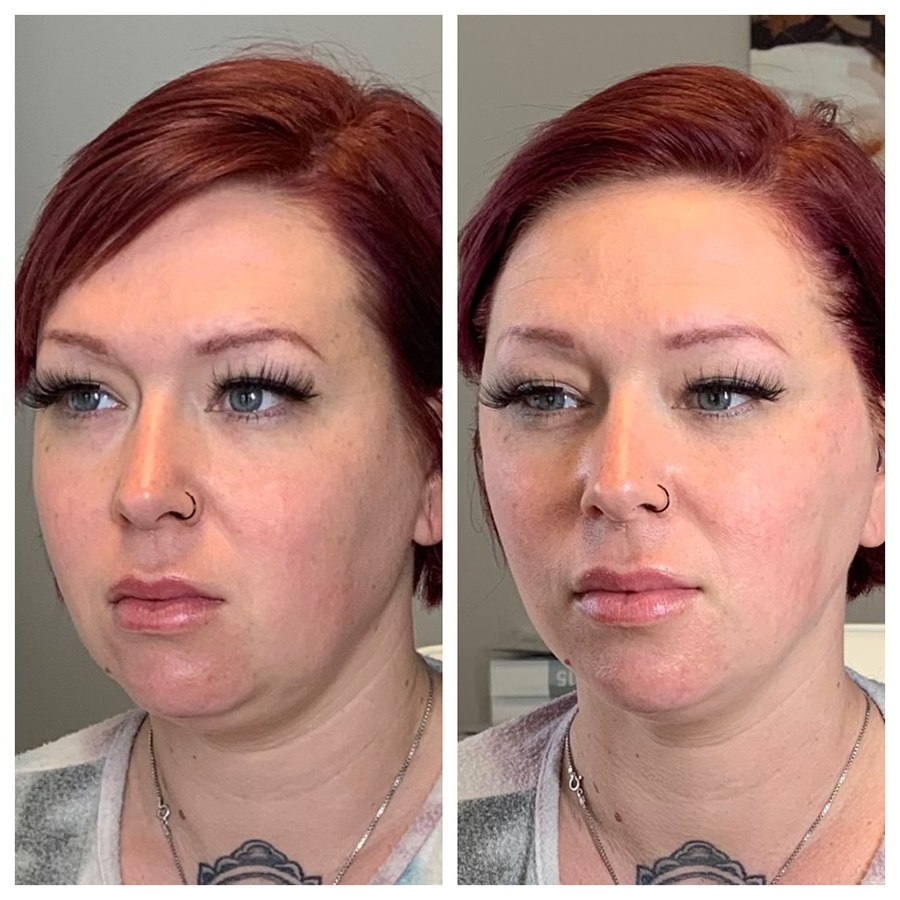
Representative clinical results from the device manufacturer. Individual results vary; your plan is tailored during your visit.
Overview
PDO (polydioxanone) threads are dissolvable sutures placed beneath the skin to gently lift sagging tissue and trigger new collagen. They offer a subtle lift without the downtime of a surgical facelift.
Over the following months the threads dissolve, but the collagen they stimulate continues to firm and support the skin — for a natural, refreshed look.
A closer look
PDO (polydioxanone) thread lifts are one of the closest non-surgical answers to a facelift for the right candidate. Dissolvable threads are placed beneath the skin to do two things at once: physically lift sagging tissue right away, and stimulate your body to lay down fresh collagen along the thread as it dissolves over the following months.
For mild to moderate sagging — softening jowls, lifting the cheeks, refining the jawline — a thread lift can turn back the clock with no incisions, no general anesthesia, and a fraction of the downtime. It is not a replacement for surgery when laxity is advanced, and a board-certified dermatologist will tell you honestly which camp you’re in.
These treatments are often researched side by side because they all fight sagging — but they work at different depths and in different ways. PDO threads give an immediate mechanical lift plus collagen over time. Ultherapy® uses focused ultrasound to tighten deep foundational layers with no downtime. Radiofrequency microneedling (the category that includes Morpheus8) remodels the skin from the surface down. Devices like Sofwave heat the mid-dermis with ultrasound.
The honest answer is that the best result often combines two of these — for example, threads to lift plus Ultherapy® or radiofrequency to tighten. At Juniper in Bend, your dermatologist designs that combination around your face rather than selling a single machine.
The threads themselves dissolve within about six months, but the collagen they stimulate holds the improvement longer — commonly a year to eighteen months, and sometimes longer in younger patients with better skin elasticity. Results are refreshed with repeat treatment as needed.
Because the effect is partly your own new collagen, thread lifts tend to age gracefully rather than dropping off suddenly. Individual results vary.
Downtime is modest. Most people are back to daily activities within a day or two, though you may feel tightness, mild soreness, or see slight puckering that settles as the threads integrate. Bruising and swelling are usually minor.
Because threads are placed along facial planes near nerves and vessels, technique matters — another reason to have the procedure done by a physician who knows the anatomy in detail.
What to expect
Expect some tightness, mild swelling, or bruising for a few days, and occasionally a pulling sensation when you move your face - this eases quickly as the threads settle.
You'll see an immediate subtle lift, which improves further over the following weeks as the threads stimulate fresh collagen along their path.
What it treats
Mild sagging along the jawline lifted and repositioned.
Subtle lift to cheeks that have begun to fall.
Gentle support for a heavy brow or lax neck skin.
Why patients choose it
Threads provide a visible lift the day of treatment.
Stimulates ongoing firming as threads dissolve.
A non-surgical alternative with a short recovery.
Investment & financing
Thread lifting is priced by the number and type of threads your lift requires, mapped to your anatomy at your visit. It's a refined middle ground between injectables and surgery - we'll help you decide if it's the right fit.
Exact pricing is personalized to your plan and confirmed at your visit. We accept major cards and offer CareCredit financing.
Why a dermatologist
Thread placement demands anatomical precision. A dermatologist chooses vectors that lift naturally and avoids the tethered, over-pulled look of poorly placed threads.
Call or text 541-585-7546Common questions
The threads themselves dissolve over several months, but the collagen they stimulate can maintain results for roughly a year or more, depending on the patient.
No — threads are best for mild to moderate laxity and give a subtle lift. For significant sagging, we'll discuss whether other options fit your goals better.
Most patients have mild swelling, tenderness, or bruising for a few days. Strenuous activity and facial massage are limited briefly while threads settle.
They serve different candidates. A thread lift is ideal for mild to moderate sagging with little downtime and no incisions; a surgical facelift addresses advanced laxity with longer-lasting, more dramatic results. Your dermatologist will tell you honestly which fits your face and goals.
The area is numbed first, so most patients feel pressure and tugging rather than pain. Some soreness afterward is normal and settles within a few days.
Yes — threads pair especially well with Ultherapy® or radiofrequency for tightening, and with filler or Sculptra® to restore volume. A combination plan often gives the most natural, complete lift.
You'll notice an immediate lift from the threads themselves, then continued improvement over two to three months as new collagen forms. Individual results vary.
Yes. Juniper Dermatology in Bend offers PDO thread lifts, Ultherapy®, radiofrequency microneedling, and injectable options — combined by a board-certified dermatologist into a personalized non-surgical lift plan.
Bend · Central Oregon
Dermatologist-led aesthetic care in Bend. No pressure — just an expert plan built around you.