Rosacea & facial redness
Calms persistent redness, flushing and the visible vessels that skincare cannot remove.
Redness, Acne & Scar Laser · Bend
Redness tells a story: rosacea, inflamed acne, lingering post-acne marks, or a scar that still looks pink. Our newer-generation VBeam Prima uses precise 595 nm pulsed-dye laser energy to target that redness — without resurfacing the skin.
Choose Aesthetics & Laser in our secure Bend scheduler. Not sure whether the redness is rosacea, acne or scarring? That is exactly what we sort out.
Reviewed September 24, 2026 by Karla Snider Pivik, DO, FAAD, FAOCD, board-certified dermatologist and founder.
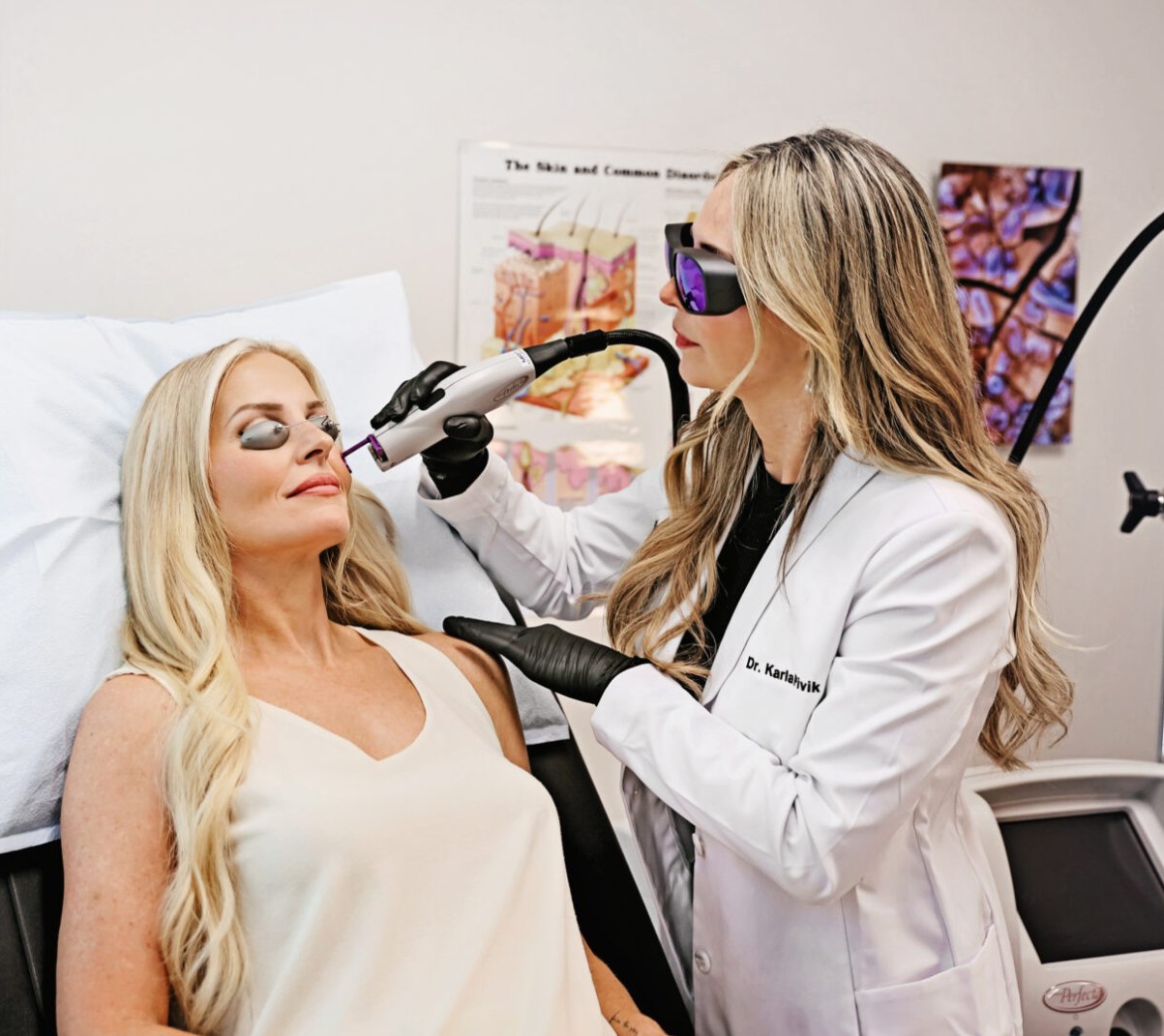
Before & after
A mix of actual Juniper Dermatology patients and representative manufacturer clinical images — each labeled below. Individual results vary; your plan is tailored during your visit.
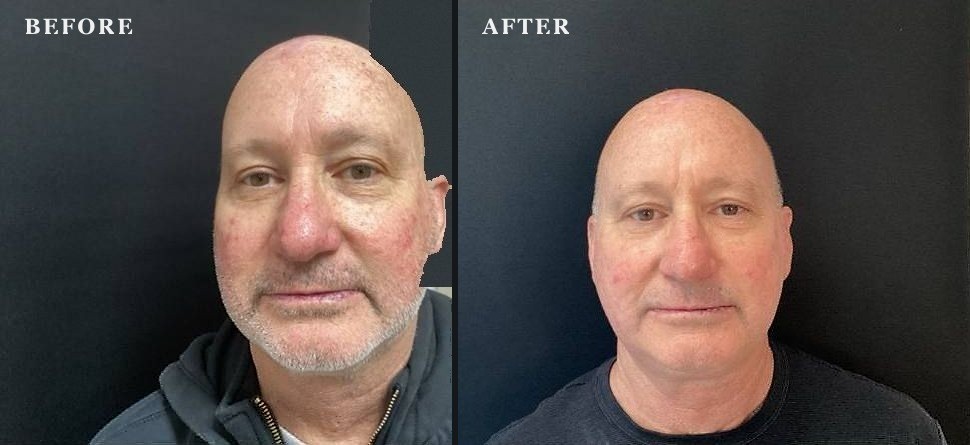
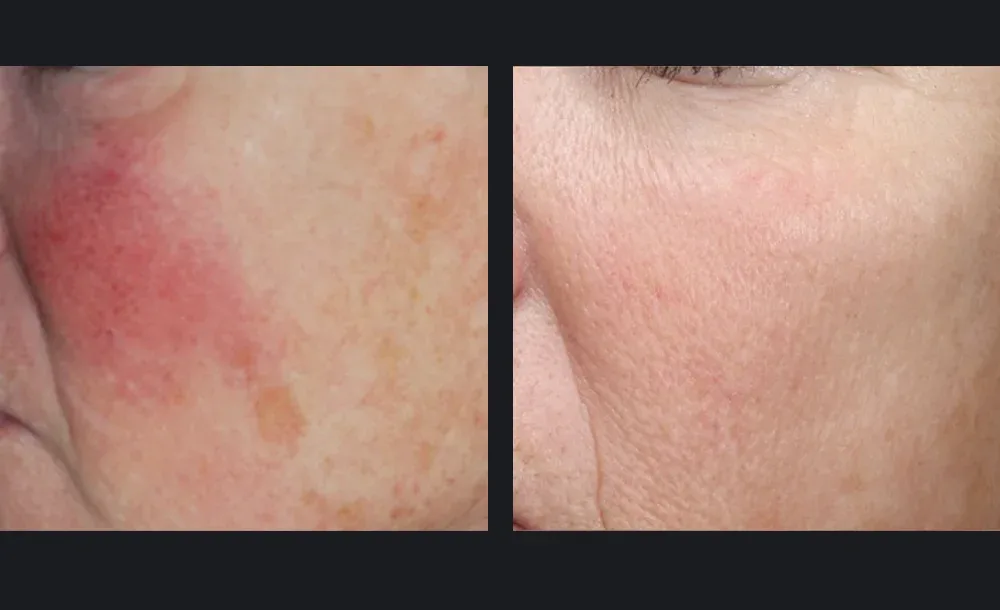
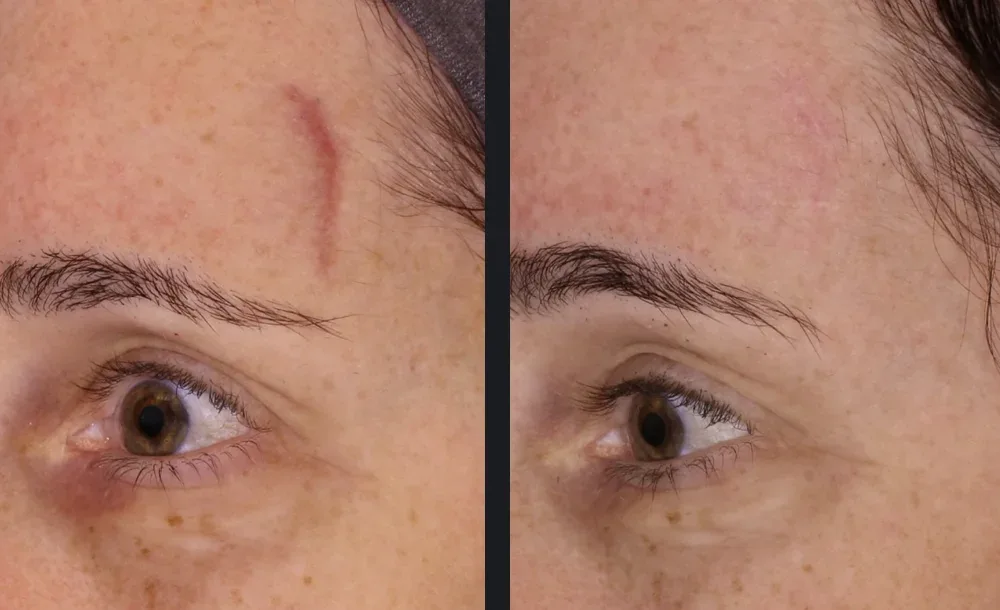
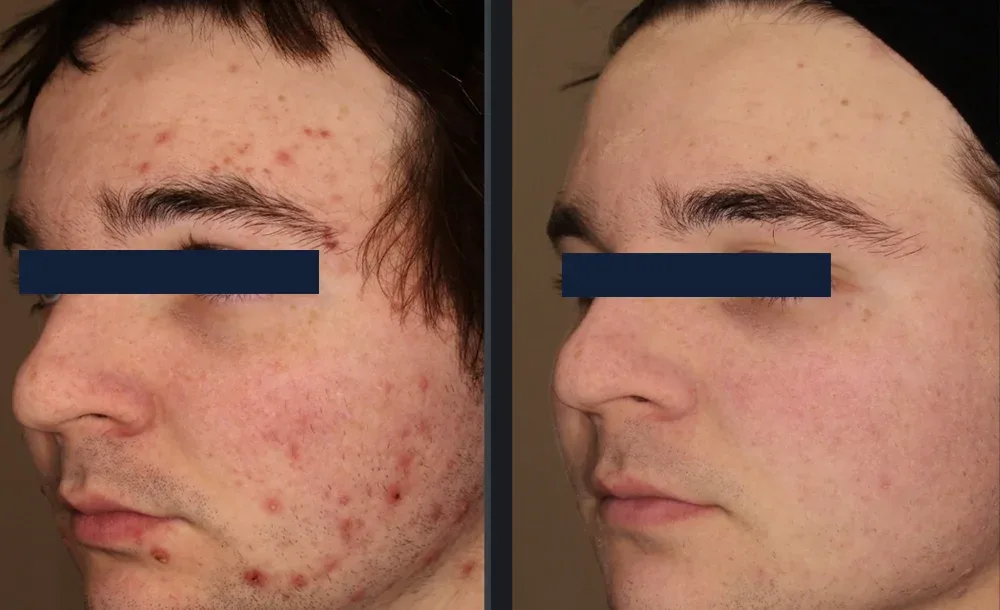
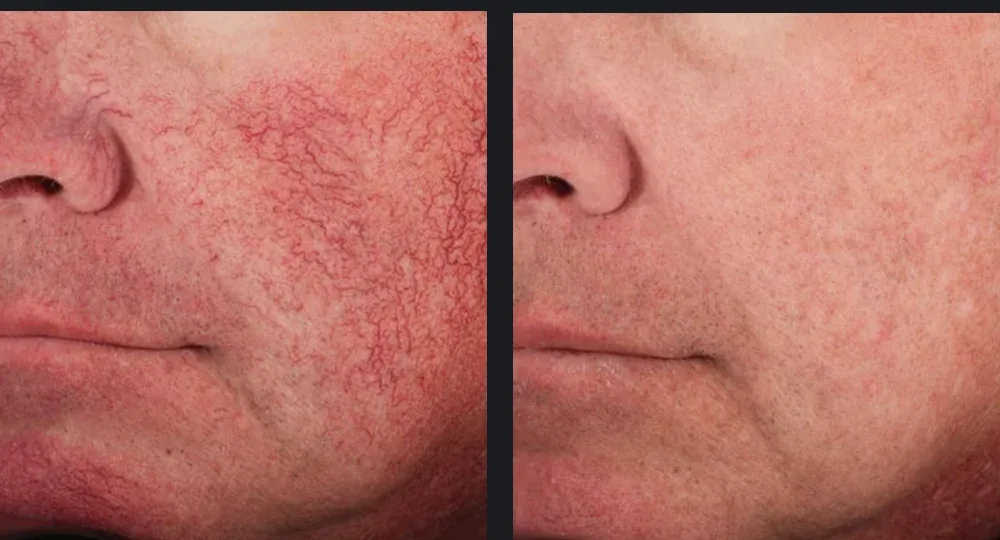
One precise wavelength · three high-value targets
VBeam is at its best when red or pink color is part of the problem. We use it to calm vascular rosacea, reduce selected acne-related inflammation and fade post-acne redness or the vascular color in a newer scar. If a scar is pitted, tethered or raised, we add the treatment that addresses its structure rather than asking one laser to do everything.
Part of Juniper’s Bend Laser Center
See how resurfacing, vascular, pigment, tattoo, hair-reduction, and related energy treatments differ in targets, downtime, and skin-tone considerations. Treatments are performed at our Bend flagship; we welcome patients from Redmond and across Central Oregon.
Overview
VBeam® is a pulsed-dye laser that delivers a 595 nm wavelength absorbed by hemoglobin in visible blood vessels. That selectivity makes it a dermatology standard for rosacea, flushing, broken capillaries and other vascular redness while sparing the surrounding skin.
It also fills an important gap in acne care. VBeam can calm selected inflammatory redness and target the flat red or pink marks that remain after a breakout — called post-acne erythema. It can also reduce the vascular redness in newer acne scars. For indented or pitted scars, we pair VBeam with a texture-remodeling treatment such as fractional laser, RF microneedling, subcision or TCA CROSS when appropriate.
VBeam is still uncommon in Central Oregon, and Juniper's VBeam Prima is a newer-generation platform with integrated cooling and efficient treatment of larger areas. Because facial redness can come from several different conditions, our dermatology team diagnoses the cause first and then decides whether VBeam, medication, another laser, or a combined plan makes the most sense.
A closer look
VBeam® is a pulsed-dye laser — the gold-standard technology for vascular concerns. Its wavelength is absorbed specifically by the red pigment in blood vessels, so it targets facial redness, rosacea flushing, broken capillaries, spider veins, cherry angiomas, and more, while leaving surrounding skin alone.
For chronic redness and rosacea, VBeam addresses the visible vessels that creams and skincare can’t reach — which is why it’s a mainstay in dermatology practices specifically.
Acne can leave more than one kind of mark. Post-acne erythema is the flat red or pink color that lingers after a blemish settles; a true atrophic scar is an indentation or change in texture. VBeam targets the vascular red component. It may also complement a medical plan for selected inflamed acne, but prescriptions and good acne control remain the foundation when active breakouts are driving new marks.
This distinction matters. A 2022 systematic review found pulsed-dye lasers were the most commonly used laser devices in the published post-acne erythema literature. A 2025 randomized comparative trial also found significant improvement with pulsed-dye laser treatment for post-acne erythema. For deeper pitted scars, VBeam is often one layer of a combined plan rather than the whole plan.
A new acne, surgical or traumatic scar may have a visible red vascular component. VBeam can help fade that color without removing the skin’s surface. If the scar is raised, tethered or indented, color treatment alone will not correct the structure underneath.
A 2024 randomized trial of erythematous acne scars found that adding 595 nm pulsed-dye laser to a nonablative fractional laser improved erythema outcomes more than fractional laser alone. That supports the way we think about mixed scars at Juniper: treat redness with a vascular laser and pair it with the right remodeling tool when texture is also present.
Both treat redness, but differently. VBeam (pulsed-dye laser) is highly targeted to blood vessels, making it the stronger choice for true rosacea, prominent vessels, and defined broken capillaries. IPL (intense pulsed light) covers a broader range of wavelengths and is excellent for diffuse redness combined with brown sun spots — a more general “tone” treatment.
Many patients with both redness and sun damage do best with a combination. Your dermatologist decides which tool — or both — fits your skin, rather than defaulting to whatever one device a clinic owns.
VBeam treats rosacea and facial flushing, post-acne redness, selected inflammatory acne, red scars, broken capillaries and spider veins, cherry angiomas, port-wine birthmarks, and other vascular redness. Treatment is quick, and most patients need a short series for diffuse or chronic concerns.
Downtime is usually minimal — some warmth and redness for a day, and occasionally temporary bruising (“purpura”) at higher settings used for stubborn vessels. We tailor settings to your comfort and calendar.
Newer clinical evidence
The evidence supports pulsed-dye laser for the vascular, red component of acne marks and scars. It does not mean that VBeam alone corrects every scar type; pitted and tethered scars often need a combined plan.
What to expect
VBeam is a non-resurfacing pulsed-dye laser, so most patients have mild warmth, swelling or redness for several hours to a few days rather than peeling. When stubborn vessels or scars need a more intensive setting, temporary purple 'bruise-like' spots (purpura) can appear and fade over several days.
Rosacea, post-acne redness and vascular scars usually improve progressively across a series. We choose the settings around the target, your skin and your tolerance for visible downtime.
What it treats
Calms persistent redness, flushing and the visible vessels that skincare cannot remove.
Can complement medical acne treatment by reducing selected inflammatory redness; prescriptions remain the foundation when needed.
Targets lingering flat red or pink marks after breakouts, also called post-acne erythema.
Reduces the vascular color in newer scars; pitted texture may need a paired remodeling treatment.
Clears broken vessels on the face and body.
Fades small red spots quickly and precisely.
A trusted option for vascular birthmarks.
Why patients choose it
The most trusted laser for redness and vascular lesions.
Many patients see improvement within days.
Dynamic cooling protects skin during treatment.
Return to daily activities right after treatment.
Investment & financing
V-Beam is priced per session and by the area treated. For rosacea and persistent redness we'll recommend a sensible series plus maintenance, and lay out the investment clearly - no pressure, just a plan.
Exact pricing is personalized to your plan and confirmed at your visit. We accept major cards and offer CareCredit financing.
Why a dermatologist
A red mark may be rosacea, active acne, post-acne erythema, a vascular scar, or something else entirely. A dermatologist identifies the target first, treats active disease when needed, and combines VBeam with resurfacing only when texture calls for it.
Call or text 541-585-7546Common questions
Many patients need a series of treatments for lasting redness reduction, with visible improvement often beginning after the first session. Your dermatologist tailors the plan to your skin.
Downtime is minimal. Some patients have temporary redness or, at higher settings, brief bruising. Most return to normal activities immediately.
VBeam can reduce selected inflammatory redness and may complement a medical acne plan, but it does not replace appropriate topical or oral treatment. Our dermatology team treats the acne itself while using laser selectively for redness and early scarring.
Yes. VBeam is especially useful for flat red or pink post-acne marks and the vascular redness in newer scars. It does not resurface deep pitted scars by itself, so indented texture may need fractional laser, RF microneedling, subcision, TCA CROSS or another scar-specific treatment.
Post-acne erythema is flat red or pink color left after inflammation; VBeam targets that vascular color. A pitted scar is a structural depression in the skin and usually needs collagen remodeling or scar-release treatment. Many patients have both, so a combination plan can address color and texture separately.
Yes — VBeam treats post-acne redness, selected inflammatory acne, red scars, spider veins, cherry angiomas, port-wine stains and other vascular redness in addition to rosacea and flushing.
VBeam is available at only a small number of Central Oregon dermatology practices. Juniper offers a newer-generation VBeam Prima at our Bend office with integrated cooling and dermatologist-directed treatment planning.
VBeam's 595 nm pulsed-dye laser is a well-established, highly targeted option for persistent rosacea redness and visible vessels. Because rosacea is chronic and may include bumps or eye symptoms as well as redness, we often combine laser with medical treatment and maintenance.
VBeam is priced per session and by the area treated. At your visit we map out a sensible series and maintenance plan with clear pricing — and we offer flexible financing. Ask about membership and loyalty savings.
Most patients describe VBeam as a quick, warm rubber-band snap. The VBeam Prima's dynamic cooling sprays the skin an instant before each pulse for comfort, and no anesthetic is usually needed.
For true rosacea and prominent vessels, VBeam (pulsed-dye laser) is typically the stronger, more targeted choice. IPL is excellent when redness is combined with brown sun spots. Your dermatologist may recommend one or a combination based on your skin.
Most patients need a short series for rosacea and vascular concerns, with visible improvement building over the treatments. Individual results vary; your dermatologist estimates your plan at your visit.
Most patients describe a quick snapping sensation with a cooling burst that protects the skin. Treatment is fast and comfortable for the vast majority of patients.
At standard settings, downtime is minimal — some redness and warmth for a day. For stubborn vessels, higher settings can cause temporary bruising (purpura) that fades over about a week. We'll match the setting to your schedule.
Yes — VBeam is highly effective for cherry angiomas, broken capillaries, and spider veins on the face, often in one or a few sessions.
Yes. A 2022 systematic review found pulsed-dye lasers were the most commonly used laser devices in studies of post-acne erythema. A 2025 randomized trial found pulsed-dye laser effective for post-acne erythema, and a 2024 randomized trial found better erythema outcomes when 595 nm pulsed-dye laser was added to fractional laser for erythematous acne scars. Individual results and the right treatment combination vary.
Bend · Central Oregon
Dermatologist-led aesthetic care in Bend. No pressure — just an expert plan built around you.