Painful, recurring lumps
Deep, tender nodules or boil-like bumps that keep coming back in the same areas.
Medical Dermatology
Hidradenitis suppurativa (HS) is a chronic, painful inflammatory condition - not an infection, not poor hygiene, and nothing you caused. With today's treatments, including biologics, most people can get real, lasting relief.
✓ Medically reviewed by Dr. Karla Snider Pivik, DO, FAAD, FAOCD — board-certified dermatologist

Overview
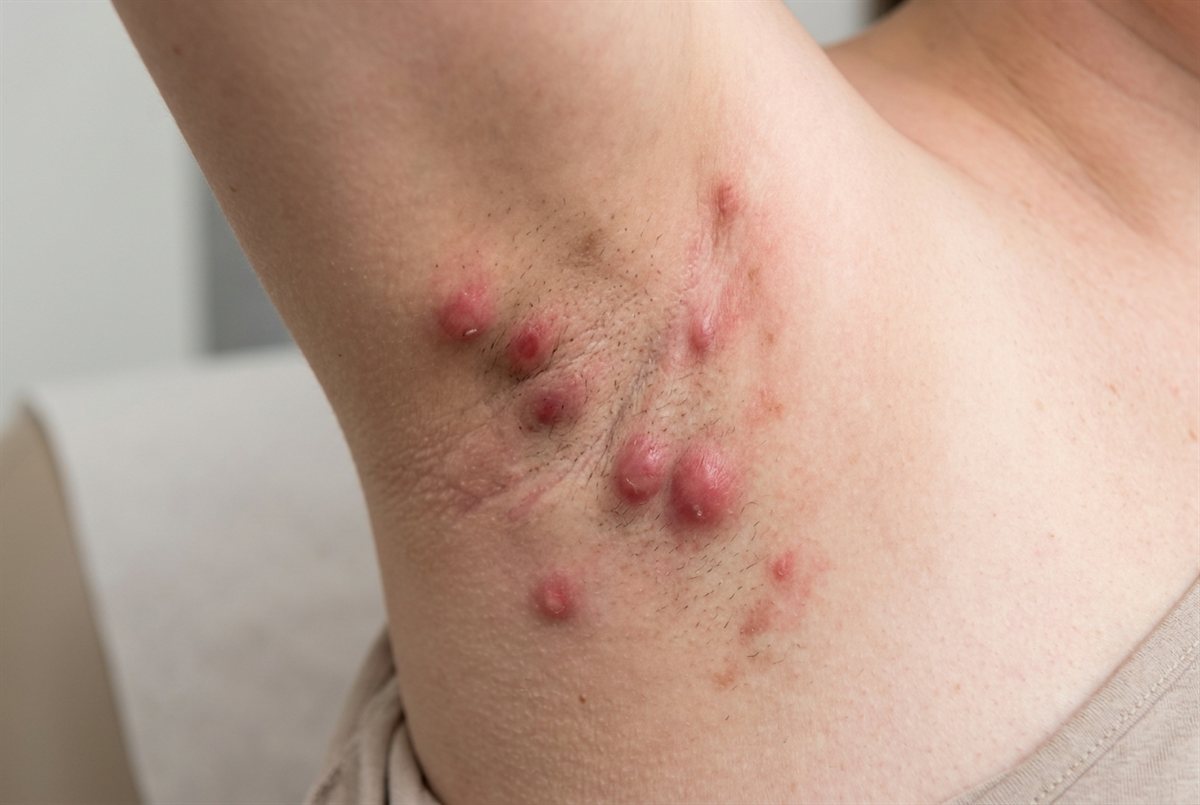

Hidradenitis suppurativa - sometimes called acne inversa - causes painful, recurring lumps, deep nodules, and abscesses in areas where skin rubs together: the underarms, groin, inner thighs, buttocks, and under the breasts. Over time these can break open, drain, and form scars and tunnels under the skin. It's driven by an overactive inflammatory process around the hair follicles, and it is far more common than most people realize.
One of the hardest parts of HS is how long it often goes misunderstood. Many people are told it's just boils, ingrown hairs, or a hygiene problem, and cycle through years of antibiotics and drainage without a real plan. It is none of those things - it's a recognized dermatologic disease, and a dermatologist can diagnose it, stage it, and treat the inflammation at its source.
We also understand what HS does beyond the skin. The pain, drainage, odor, and scarring in such private areas can be exhausting and deeply isolating - many people hide it even from those closest to them. You will not be judged here. We treat the whole person: controlling the disease, managing pain, and caring for the emotional weight it carries, so you can feel like yourself again.
Dermatologists use the Hurley staging system to gauge severity and match treatment to where you are:
Once HS is well controlled, the same dermatologists can discuss options for softening residual scarring through our aesthetic dermatology practice.
Signs & symptoms
Deep, tender nodules or boil-like bumps that keep coming back in the same areas.
Lesions in skin-fold areas - armpits, groin, inner thighs, buttocks, and under the breasts.
Lumps that swell, open, and drain fluid or pus, sometimes with an odor.
Double-headed blackheads clustered in affected areas - a characteristic clue of HS.
Sinus tracts connecting lumps beneath the surface, a sign the disease has progressed.
Rope-like or pitted scars left behind as lesions heal, which can limit movement.
How we treat it
HS care works best as a long-term, layered plan - calming today's flares while treating the inflammation that drives new ones. We match the plan to your stage and escalate to advanced options when they're needed.
Antimicrobial washes, topical antibiotics, and proper wound care to calm mild disease and support healing.
Longer courses of anti-inflammatory antibiotics, hormonal therapy for appropriate patients, and other oral options to reduce flares.
Advanced injectable biologics that target the specific immune signals driving HS (TNF and IL-17 pathways) - FDA-approved options for moderate-to-severe disease that can reduce lesions, pain, and drainage. We manage this care in-house.
Drainage of painful flares and intralesional steroid injections to quickly settle inflamed lumps, plus procedural options for stubborn tracts.
A practical plan for managing pain, drainage, and day-to-day comfort - because living well with HS matters between visits.
Judgment-free guidance on smoking cessation, weight and friction management, clothing, and the emotional side of HS - caring for you, not just the lesions.
When to see a dermatologist
If you have painful lumps that keep returning in the same areas - especially the underarms or groin - or you've been treated for 'recurring boils' without a lasting plan, see a dermatologist. HS responds best when it's diagnosed and treated early, before scarring and tunnels develop. It's a common condition, and there's no need to feel embarrassed - we treat it with care and discretion every week.
Schedule with JuniperCommon questions
No. HS is a chronic inflammatory disease of the hair-follicle units, with genetic, hormonal, and immune roots. It is not caused by being unclean, it is not an infection you catch, and it is not contagious. Being told otherwise is one of the most common - and most frustrating - experiences HS patients have.
Yes. We prescribe and manage biologics in our practice. For moderate-to-severe HS, FDA-approved biologics that target the immune signals driving the disease (such as TNF and IL-17) can significantly reduce lumps, pain, and drainage. We handle the evaluation, prior authorizations, and monitoring so you can focus on getting better.
Recurring, painful lumps in the same areas - especially the underarms, groin, or under the breasts - are a classic sign of HS rather than ordinary boils. That pattern is exactly why it's worth seeing a dermatologist: the right diagnosis opens the door to treatments that actually break the cycle.
Please don't. Squeezing or popping lumps tends to worsen inflammation and scarring. Warm compresses can help, and we can drain a painful flare safely in the office or inject it to calm it quickly - as part of a plan that also treats the underlying inflammation.
Yes. HS is chronic, but modern treatment has changed the outlook dramatically. With a consistent, layered plan - and biologics when they're needed - most people see meaningfully fewer flares, less pain, and less drainage. Starting early gives the best chance of preventing scarring and tunnels.
You are not alone, and you will not be judged. HS affects a private, sensitive area and carries a real emotional weight - we see that every week and treat it with discretion and compassion. A visit is a calm, respectful conversation and exam, followed by a clear plan built around your life. Caring for the whole person, including how HS makes you feel, is part of how we practice.
Bend & Redmond · Central Oregon
Board-certified dermatology with same-week appointments — because no one should have to wait for expert care.