Acne Care · Central Oregon
Hormonal Acne in Women: Causes and Dermatologist Treatment Options
Hormonal acne clusters along the jawline and chin and flares with your cycle, stress, or conditions like PCOS. Because the driver is hormonal, it responds to different treatment than most acne — here's what works.
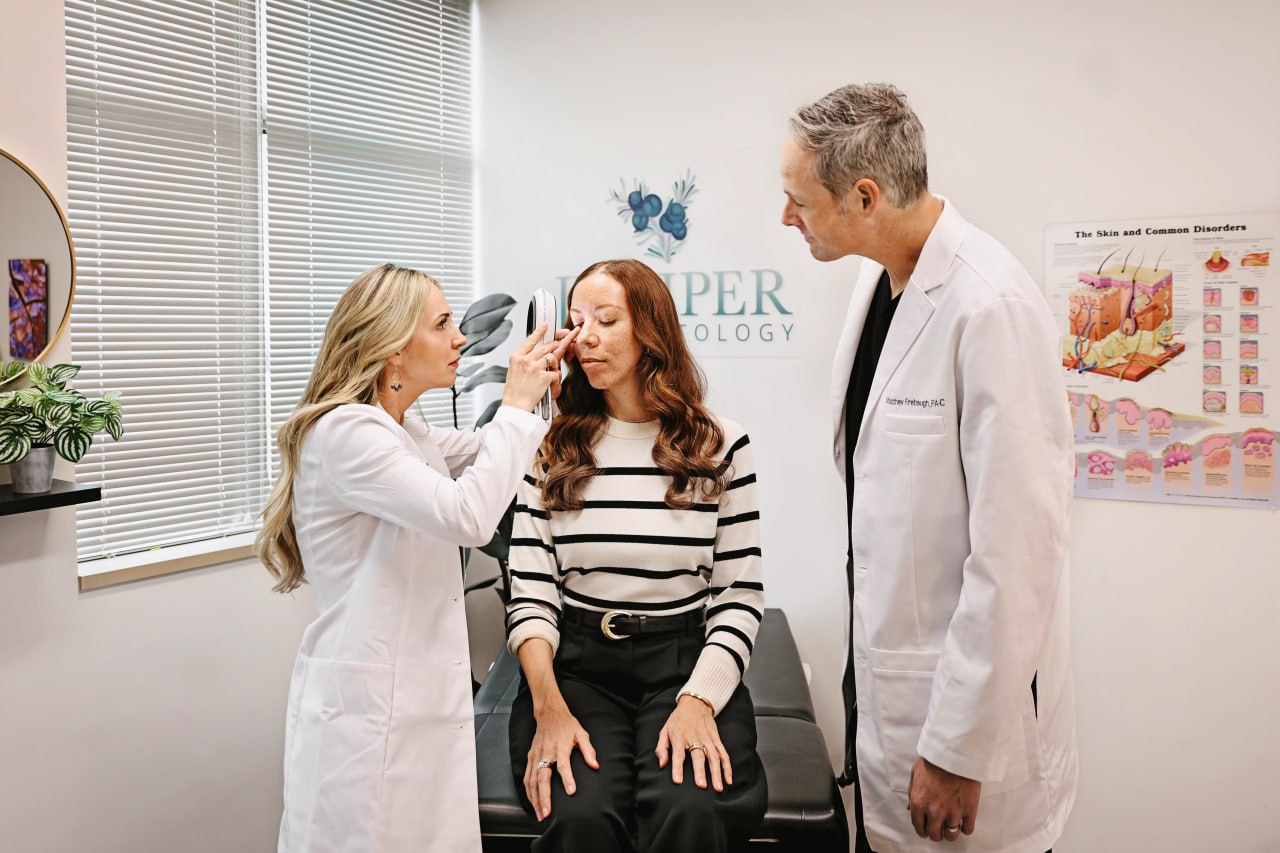
If you're well past your teenage years and still getting deep, tender breakouts along your jawline and chin — especially the week before your period — you're not imagining it, and you're not doing anything wrong. Hormonal acne is a distinct pattern, and because its driver is hormonal, it responds to a different approach than acne that's mostly surface-level.
The pattern that points to hormones
Breakouts that cluster on the lower face and jawline, flare in the days before a period, are often deep or cystic rather than surface whiteheads, and persist into adulthood. Seeing this pattern is the difference between guessing and treating the actual cause.
What causes hormonal acne
Androgens — hormones such as testosterone — increase oil (sebum) production and change how the pore lining sheds, which sets up the plugged, inflamed pore. When androgens rise or fluctuate, or when the skin is more sensitive to them, the result is breakouts that follow a hormonal rhythm. Common drivers of the pattern include:
- The menstrual cycle — androgens surge and estrogen dips before your period, driving premenstrual flares.
- PCOS (polycystic ovary syndrome) — a common cause of persistent adult acne in women, often alongside irregular cycles.
- Coming off the pill — changes in hormone levels can trigger a flare as your body adjusts.
- Perimenopause — shifting hormones in the 40s and 50s can bring acne back after years of clear skin.
- Stress — which influences the hormones that drive oil production.
How hormonal acne is treated differently
Topical treatment still has a role, but it often can't address the root driver on its own. Dermatologists add hormonal therapy when the pattern fits, which can be a turning point for stubborn jawline acne:
- Spironolactone — an oral medication that blocks the effect of androgens on the oil glands and is a staple of hormonal acne care in women.
- Certain oral contraceptives — specific combined pills with anti-androgenic progestins can regulate the hormonal cycle behind breakouts.
- Prescription topicals — retinoids and other agents that keep pores clear and calm inflammation alongside hormonal therapy.
- Isotretinoin — reserved for severe, scarring, or treatment-resistant cases when appropriate.
- In-office care — peels, cortisone injections for painful cysts, and laser/light to reduce redness and manage scarring.
Because hormonal therapy interacts with the whole body, it's a decision to make with a clinician who knows your history, your goals, and any pregnancy plans. Not every patient wants or needs hormonal treatment — the plan is built around you.
When to see a dermatologist about hormonal acne
It's worth a visit if your breakouts are deep or painful, if they flare with your cycle and haven't improved after two to three months of over-the-counter treatment, or if you're noticing marks and scars. In some cases, persistent adult acne with irregular cycles warrants a look at PCOS, and your dermatologist can help point you in the right direction. You can learn more about our broader acne care in Bend and Redmond.
Frequently asked questions
How do I know if my acne is hormonal?
Hormonal acne tends to cluster on the jawline and chin, flare in the days before your period, and be deeper and more tender than surface whiteheads. It often persists into adulthood. A dermatologist can confirm the pattern and rule out look-alikes.
Is spironolactone safe for acne?
Spironolactone is a well-established, commonly used option for hormonal acne in women and is generally well tolerated. It is not for people who are pregnant or planning pregnancy, and it's important to discuss your history and any pregnancy plans with your dermatologist first.
Can adult acne mean I have PCOS?
Not necessarily, but persistent adult acne — especially with irregular periods or other signs of excess androgens — can be associated with PCOS. Your dermatologist can help identify when a fuller evaluation is warranted.
Do you treat acne caused by going off birth control?
Yes. Post-pill flare is a common hormonal pattern, and we build a plan to calm it — often combining prescription topicals with, when appropriate, other hormonal options.
Will changing my diet fix hormonal acne?
Diet is not the sole cause of hormonal acne, and no single food creates it. For some people, high-glycemic diets and certain dairy contribute to flares. We treat the medical driver first, then address diet and lifestyle where they genuinely help.
Sources & further reading
This article is patient-education information reviewed by a board-certified dermatologist. It is general information, not medical advice, and is not a substitute for an in-person evaluation. For concerns about your skin or hair, please see a qualified clinician.