Raised, scaly plaques
Thick red or pink patches topped with silvery-white scale, most often on elbows, knees, scalp, and lower back.
Medical Dermatology
Psoriasis is a chronic, immune-driven condition — not poor hygiene, and not contagious. With today's treatments, most people can get their skin clear or nearly clear.
✓ Medically reviewed by Dr. Karla Snider Pivik, DO, FAAD, FAOCD — board-certified dermatologist

Overview
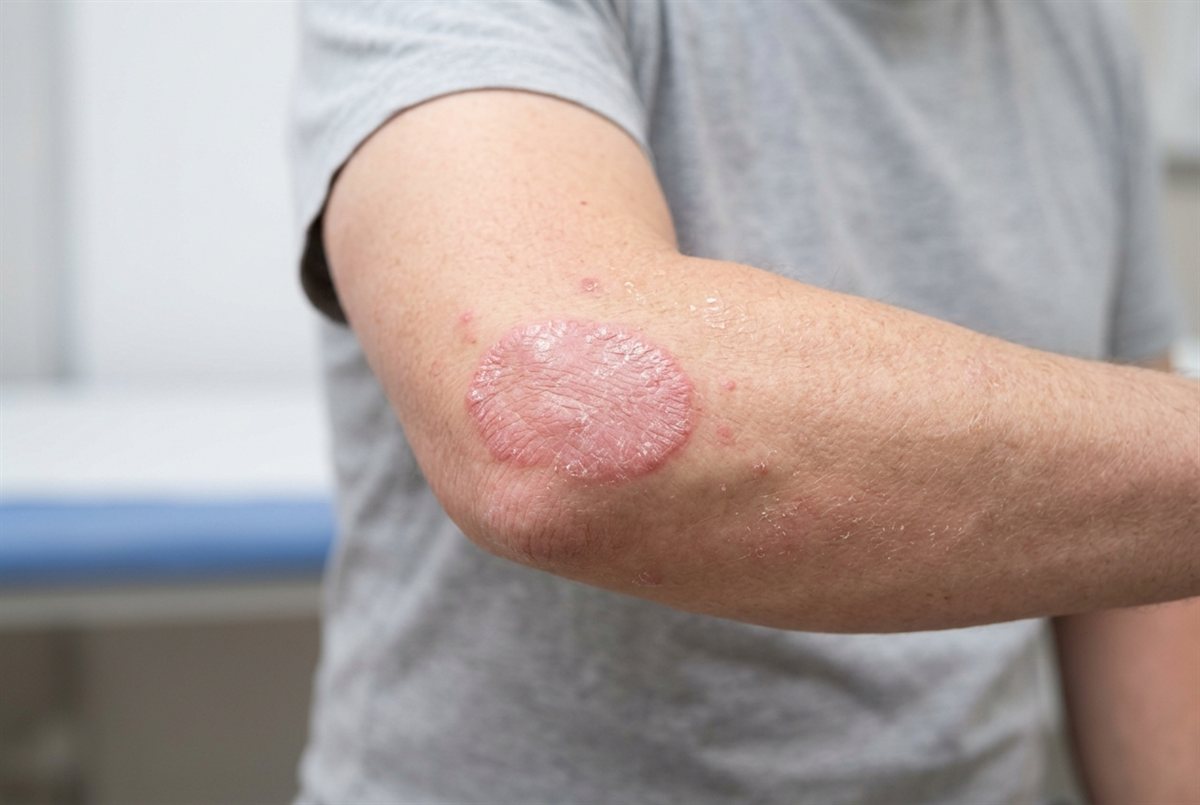
Psoriasis happens when an overactive immune system tells skin cells to grow far too fast. Instead of shedding invisibly, those cells pile up into thick, scaly plaques that can itch, crack, and bleed. It's a lifelong condition that tends to come and go in flares — but it's also one of the most treatable it has ever been.
It's important to know psoriasis is more than skin-deep. It's a systemic inflammatory disease linked to psoriatic arthritis and to heart, metabolic, and mood health, which is why it deserves a dermatologist's eye rather than a drugstore cream. We look at the whole picture, not just the patch in front of us.
We also see how much psoriasis can weigh on you. Plaques on the hands, scalp, or face — or anywhere clothing can't hide — can make people feel self-conscious, avoid short sleeves or swimming, and carry stress that itself makes flares worse. Treating psoriasis well means treating that too. Our goal is skin you feel comfortable in and confident showing.
Psoriasis looks different from person to person. We diagnose the type and tailor the plan to it.
If flares have left redness or marks behind, the same dermatologists can discuss gentle options through our aesthetic dermatology practice once your psoriasis is well controlled.
Signs & symptoms
Thick red or pink patches topped with silvery-white scale, most often on elbows, knees, scalp, and lower back.
Plaques can itch or feel tender, and may crack or bleed when they're dry or irritated.
Persistent thick flakes and plaques on the scalp that don't behave like ordinary dandruff.
Pitting, ridges, thickening, discoloration, or nails lifting away from the nail bed.
Smooth, red, sometimes raw-feeling areas in the armpits, groin, or under the breasts (inverse psoriasis).
Achy, swollen, or stiff joints — a signal of psoriatic arthritis that should be evaluated.
How we treat it
Psoriasis care is not one-size-fits-all. We match the plan to how much skin is involved, where it is, your joints, and your life — and we escalate to advanced options when you need them.
Medical-grade steroids, vitamin-D analogs, and newer non-steroidal creams (roflumilast, tapinarof) to calm plaques — including gentler options for the face and skin folds.
Targeted medicated solutions, foams, and shampoos for the scalp, plus treatment strategies for nail involvement.
Medically supervised narrowband UVB to slow overactive skin cells — a proven option for more widespread psoriasis.
Advanced injectable biologics that precisely target the immune signals driving psoriasis (IL-17, IL-23, and TNF pathways) — for moderate-to-severe or stubborn disease, many patients reach clear or nearly clear skin. We manage this care in-house.
Prescription oral options — including newer targeted pills — for appropriate patients who need more than topicals.
Trigger management, skin-barrier care, and attention to stress, joints, and overall health so treatment works with the rest of your life.
When to see a dermatologist
If you have thick, scaly, or itchy patches that keep coming back, scalp or nail changes, or any joint pain along with skin symptoms, see a dermatologist. Psoriasis is highly treatable, and starting the right plan early helps protect both your skin and your joints.
Schedule with JuniperCommon questions
There isn't a cure yet, but psoriasis is very controllable. With today's treatments — especially biologics — many people reach clear or nearly clear skin and stay that way. The goal is long-term control and comfort, not just short-term relief.
No. Psoriasis is an immune-driven condition — you cannot catch it from someone else or pass it to anyone. It's also not caused by poor hygiene.
Yes — we prescribe and manage biologics in our practice. Biologics are advanced medications that precisely target the specific immune signals that drive psoriasis (such as IL-17 and IL-23), rather than suppressing the whole immune system. For moderate-to-severe or stubborn psoriasis, they can be remarkably effective, and we handle the evaluation, prior authorizations, and monitoring for you.
Yes. Scalp and nail psoriasis are common and can be frustrating and stubborn. We use targeted topical treatments for the scalp and nails, and when disease is more extensive, systemic and biologic therapies improve the scalp, nails, and skin together.
It can. Psoriasis is a systemic inflammatory condition associated with psoriatic arthritis and with heart and metabolic health. That's why we look at the whole person — including your joints and overall health — and watch for early signs of arthritis so it can be treated promptly.
Absolutely — and you're not alone in feeling that way. Visible plaques can affect confidence, clothing choices, and stress levels, and stress can in turn worsen flares. Getting your skin clear or nearly clear consistently improves quality of life, and we treat the emotional weight of psoriasis as part of caring for the whole person.
Bend & Redmond · Central Oregon
Board-certified dermatology with same-week appointments — because no one should have to wait for expert care.