Choosing Care
How to Choose a Dermatologist in Bend or Redmond, Oregon
Searching for the best dermatologist in Bend or Redmond is really a search for the right fit — someone board-certified, accessible, and equipped for what your skin actually needs. Here is how to evaluate any Central Oregon dermatology practice, using the same standards we would want for our own families.
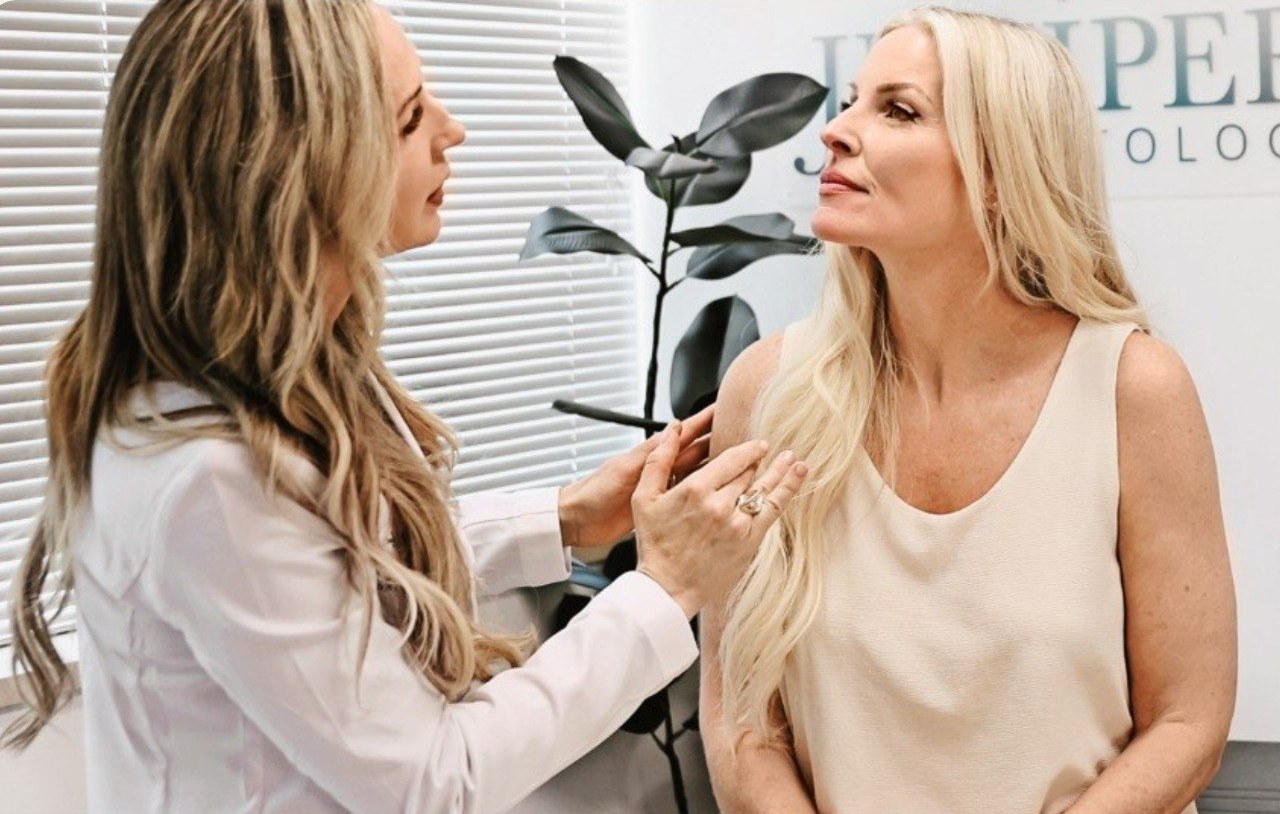
If you have searched for the best dermatologist in Bend, Oregon or best dermatologist in Redmond, Oregon, you already know the hard part is not finding a practice name — it is knowing who is actually qualified to care for your skin. Central Oregon has grown quickly, and so has the number of clinics, med spas, and out-of-town groups offering skin services. Not all of them are the same, and not all of them are led by a board-certified dermatologist.
There is no single objectively “best” dermatologist for everyone — the best choice depends on your concern, your insurance, how quickly you need to be seen, and how comfortable you feel with the physician. What we can offer is a clear, honest checklist you can apply to any practice in Bend, Redmond, or the surrounding communities, so you can decide with confidence.
1. Confirm board certification — and who you’ll actually see
The single most important credential is board certification in dermatology. A board-certified dermatologist has completed medical school plus a dermatology residency and passed rigorous specialty exams. In the United States that means certification through the American Board of Dermatology or the American Osteopathic Board of Dermatology. A crucial distinction: dermatologist is an individual physician credential, not a business-name description.
Many skin services in Central Oregon are delivered by nurses, aestheticians, or advanced-practice clinicians. That is completely appropriate for a lot of care — but you should know who is supervising and who signs off on a diagnosis. Ask directly: “Is the practice led by a board-certified dermatologist, and will a dermatologist be involved in my diagnosis?”
Quick check
You can verify any U.S. dermatologist’s certification for free through the American Board of Dermatology and confirm active licensure through the Oregon Medical Board. Reputable practices are happy to be verified.
2. Match the practice to your actual concern
“Dermatology” covers a lot of ground. A practice that is excellent for cosmetic injectables may not be the right first call for a changing mole, and a purely medical clinic may not offer laser resurfacing. Before you book, decide which bucket you are in:
- Medical dermatology — acne, rosacea, eczema, psoriasis, rashes, hair and nail concerns, and skin infections.
- Surgical & skin cancer care — skin checks, biopsies, removal of skin cancers, and reconstruction.
- Cosmetic / aesthetic dermatology — Botox and filler, lasers, peels, and skin rejuvenation.
- Hair restoration — medical evaluation of hair loss, prescriptions, PRP, and laser therapy.
A practice that handles all of these under one roof can be convenient because your records, photos, and physician stay in one place. Juniper Dermatology offers medical, skin cancer, aesthetic, and hair-restoration care in Central Oregon — but the broader point applies to any clinic you consider: make sure it genuinely does the thing you need.
3. Ask about wait times and same-week access
In many parts of the country, patients wait weeks or months for a dermatology appointment — and a growing, high-sun region like Central Oregon feels that pressure. Wait time matters clinically: a spot that is changing, bleeding, or new deserves timely evaluation. When you call, ask how soon a new patient can be seen, whether they hold urgent slots for suspicious lesions, and how they handle biopsy results.
4. Look for in-house diagnosis, surgery, and pathology pathways
For skin cancer and suspicious growths, the standard of care is a proper diagnosis before treatment. That means a dermatologist who can perform a biopsy in the office and send tissue to pathology for a definitive answer. If a true mole (nevus) is removed, it is sent to pathology to be examined — that is how dermatologists confirm exactly what a growth is. If melanoma is found, it is treated surgically by an appropriately trained physician. A practice that can screen, biopsy, and coordinate surgery keeps this chain tight and reduces hand-offs.
It is also worth asking what options a practice offers beyond surgery. Some early, non-melanoma skin cancers may be candidates for non-surgical approaches in appropriate patients. A good dermatologist will walk you through every reasonable option — surgery, Mohs, monitoring, or non-surgical treatment — rather than defaulting to one. You can read more in our overview of skin cancer screening in Central Oregon.
5. Read reviews the smart way
Online reviews are useful signal, but read them for patterns, not single opinions. Look for repeated mentions of clear communication, thorough skin checks, short wait times, and staff who follow up on results. Be skeptical of any practice — or any marketing — that claims to be flatly “the best” without evidence. Credentials, technology, and consistent patient experiences are what actually matter.
6. Consider independence and continuity
Independent, physician-owned practices and large corporate groups both exist in dermatology. Neither is automatically better — but continuity of care is worth asking about. Will you see the same dermatologist over time? Who reviews your photos year to year? For skin cancer surveillance in particular, seeing a consistent physician who knows your history is genuinely valuable.
Questions to ask before you book
- Is the practice led by a board-certified dermatologist, and will a dermatologist be involved in my care?
- How soon can I be seen as a new patient, and do you hold urgent slots for changing or bleeding spots?
- Do you perform biopsies in-house and send tissue to pathology?
- What are all of my treatment options for this concern — including non-surgical ones where appropriate?
- Do you take my insurance, and can you estimate my out-of-pocket cost?
- Will I see the same provider for follow-up and annual skin checks?
If you are weighing dermatology practices in Bend or Redmond, we would be glad to answer these questions honestly for your situation - and if another practice is a better fit for your needs, we will tell you. You can request an appointment or learn more about our Bend and Redmond offices.
Frequently asked questions
What makes a dermatologist “board-certified”?
A board-certified dermatologist has completed dermatology residency and passed the specialty exams of the American Board of Dermatology (MD) or the American Osteopathic Board of Dermatology (DO). Both are recognized dermatology boards. Certification is separate from state licensure, which confirms a physician is legally permitted to practice.
Is a DO dermatologist as qualified as an MD dermatologist?
Yes. Both MDs and DOs complete dermatology residency and board certification through recognized dermatology boards. A DO dermatologist is a fully trained skin specialist.
How do I choose between a dermatologist in Bend and one in Redmond?
Choose based on which office is closest, how soon you can be seen, and whether that location offers the specific service you need. Some practices, including Juniper Dermatology, operate offices in both Bend and Redmond so patients can pick whichever is more convenient.
Sources & further reading
This article is patient-education information reviewed by a board-certified dermatologist. It is general information, not medical advice, and is not a substitute for an in-person evaluation. For concerns about your skin or hair, please see a qualified clinician.