Bumps around the mouth
Clusters of small red bumps and tiny pustules ringing the mouth, sometimes the nose or eyes.
Medical Dermatology
A stubborn red, bumpy rash around your mouth that won't clear - and maybe keeps getting worse - is often perioral dermatitis. The fix is usually counterintuitive, and we'll walk you through it.
✓ Medically reviewed by Dr. Karla Snider Pivik, DO, FAAD, FAOCD — board-certified dermatologist

Overview
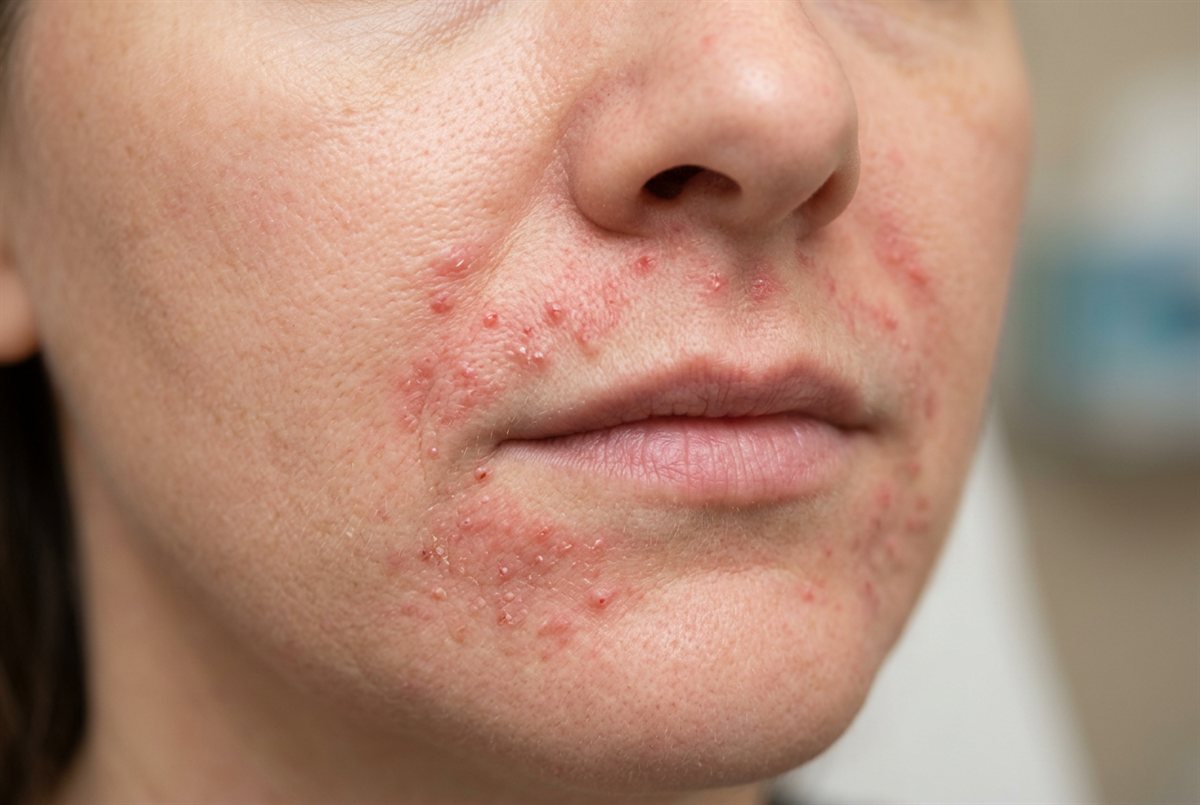
Perioral dermatitis is a common facial rash of small red bumps, tiny pustules, and mild scaling, usually clustered around the mouth - often with a telltale clear zone of normal skin right next to the lips. It can also appear around the nose (perinasal) and the eyes (periocular). It may burn, sting, or feel tight more than it itches, and it's especially common in younger and middle-aged women, though anyone can get it.
One of the biggest culprits is topical steroid creams. Steroids often make the rash look better at first, which leads to more use - but the rash rebounds worse each time they're stopped, creating a frustrating cycle. Other contributors include heavy face creams, some cosmetics, fluoridated toothpaste, and inhaled steroids. The most important - and most surprising - step in treatment is usually to STOP topical steroids on the face, even though the rash may briefly flare before it improves.
Because perioral dermatitis is easily mistaken for acne, rosacea, or eczema - and because the wrong treatment (especially steroids) can make it worse - it's worth having it properly diagnosed. With the right plan, it clears well; the keys are patience and not reaching for steroid creams. We'll guide you through the transition and get your skin calm again.
Steroid creams are the classic driver of perioral dermatitis. Here's the cycle we help you break:
A pared-back routine gives the skin room to recover. We often suggest:
Signs & symptoms
Clusters of small red bumps and tiny pustules ringing the mouth, sometimes the nose or eyes.
A thin band of normal skin right next to the lips is classically spared.
Often feels like burning, stinging, or tightness more than it itches.
The affected skin can look mildly dry, flaky, or scaly.
Temporarily better then rebounding worse with topical steroid creams.
Most frequent in younger and middle-aged women, but affects all ages and genders.
How we treat it
Treatment centers on stopping what's driving it - usually topical steroids - and calming the skin with the right medications. It takes some patience, but it clears well.
Guided discontinuation of steroid creams on the face - the single most important step, even though a brief flare is common at first.
Anti-inflammatory topicals such as metronidazole, azelaic acid, or ivermectin to settle the rash.
A course of an oral antibiotic (often a tetracycline like doxycycline) for its anti-inflammatory effect in moderate or stubborn cases.
Paring back to a gentle cleanser and light moisturizer, and pausing heavy creams, actives, and cosmetics while it heals.
Reviewing products, toothpaste, and inhalers that may be feeding the rash so you can avoid a repeat.
Confirming it's perioral dermatitis and not acne, rosacea, or eczema - because the treatments differ and steroids make this one worse.
When to come in
If you have a persistent bumpy rash around your mouth, nose, or eyes - especially one that flares whenever you stop a steroid cream - come in. Getting the right diagnosis matters, because the usual instinct (a steroid cream) tends to make perioral dermatitis worse rather than better.
Schedule with JuniperCommon questions
Perioral dermatitis is a common facial rash of small red bumps, tiny pustules, and mild scaling, typically clustered around the mouth - often sparing a thin band of skin right next to the lips. It can also appear around the nose and eyes. It tends to burn or sting more than itch and is most common in younger and middle-aged women, though anyone can develop it.
The most common trigger is topical steroid creams used on the face, which make it better briefly and then worse when stopped. Other contributors include heavy face creams and cosmetics, fluoridated toothpaste, and inhaled steroids. The exact mechanism isn't fully understood, but identifying and removing the trigger - especially steroids - is central to clearing it.
The cornerstone is stopping topical steroids on the face, even though the rash often flares briefly before it improves. From there we use anti-inflammatory topicals (like metronidazole, azelaic acid, or ivermectin) and, for stubborn cases, an oral antibiotic such as doxycycline for its anti-inflammatory effect. Simplifying your skin-care routine helps too. It clears well, but it takes patience - usually several weeks.
That rebound flare is the hallmark of perioral dermatitis. Steroids suppress the rash temporarily, so stopping them triggers a worse flare - which tempts people to restart, feeding the cycle. Breaking it means stopping the steroid and pushing through the initial flare with the right supportive treatment. We coach you through this transition so it's manageable and you come out the other side clear.
No, though they look similar and can overlap. Acne involves clogged pores with blackheads and whiteheads; rosacea centers on flushing and redness of the cheeks and nose; perioral dermatitis is bumps clustered around the mouth (or nose/eyes) with a clear zone at the lips. The distinction matters because treatments differ - and steroids, which sometimes get used for other rashes, specifically worsen perioral dermatitis. An exam clarifies it.
Bend & Redmond · Central Oregon
Board-certified dermatology with same-week appointments — because no one should have to wait for expert care.