Acne scars
Rolling, boxcar, and ice-pick scars, plus the pitted texture and discoloration acne leaves behind.
Medical Dermatology
Scar revision is a field Dr. Pivik has a deep and personal passion for. Scars can't always be erased, but with the right combination of treatments — matched to your scar and your skin — they can be dramatically softened, smoothed, and blended back into the skin around them.
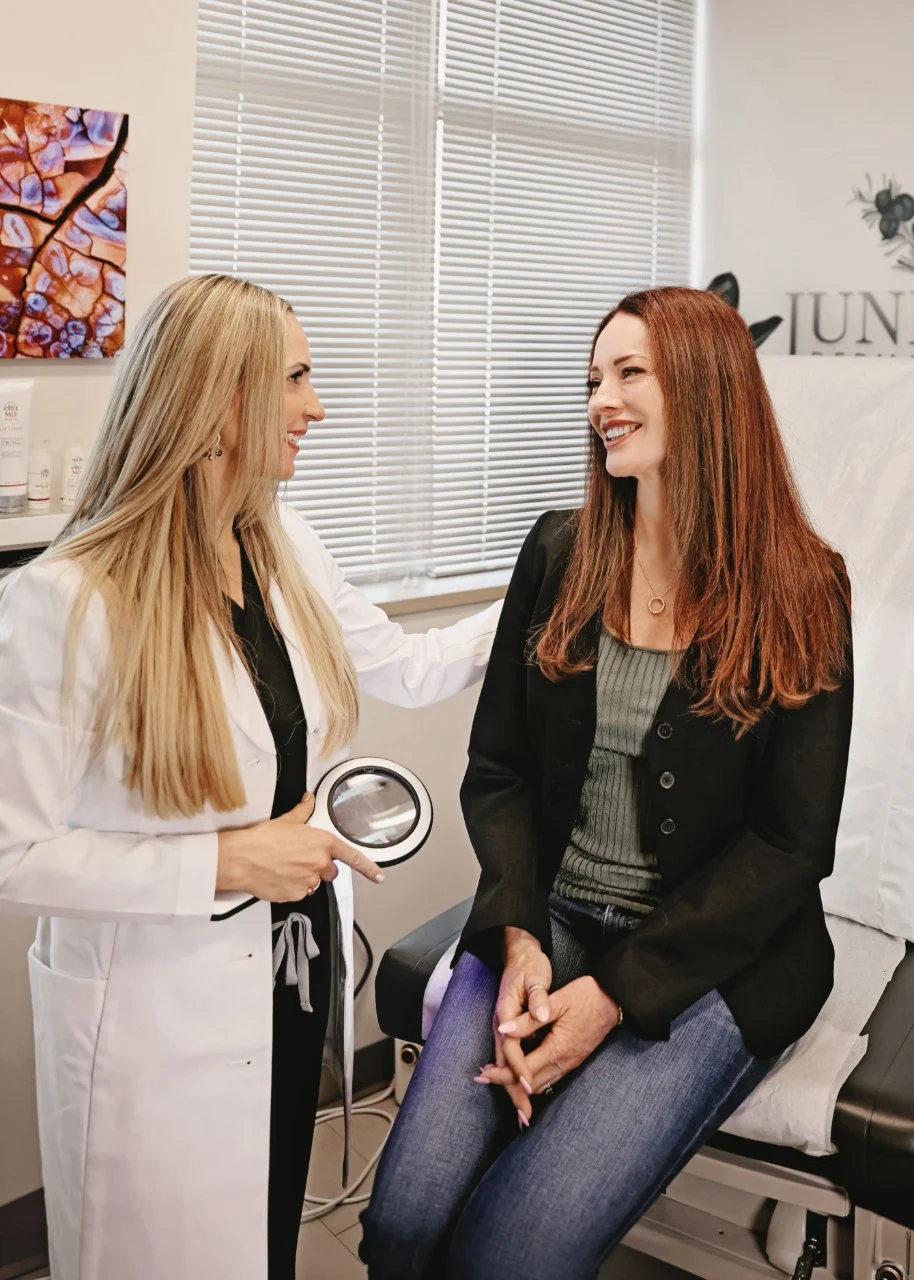
Overview
No two scars are alike, so no two scar-revision plans should be either. A raised, red surgical scar, a pitted acne scar, a tight burn scar, and a stretched traumatic scar each behave differently and respond to different tools. The first step is always a careful assessment of what kind of scar you have, how it formed, how it's maturing, and what's realistic — then we build a plan around it.
Scar revision is almost always a layered, multi-session process. We often combine several modalities over a series of visits — treating color, height, and texture in stages — because that is what produces the most natural result. We'll map out the sequence with you up front so you know what to expect and when.
Dr. Pivik has trained in scar revision and spent dedicated time learning from leaders in laser scar treatment. That multimodal, laser-forward philosophy — treating scars as a staged process rather than a single procedure — is the foundation of how we approach scars at Juniper.
One important note before we begin: because scar revision is usually considered cosmetic, most scar treatments are not covered by insurance. We'll always be upfront about costs, walk you through the expected number of sessions, and build a plan that fits your goals and your budget before anything is scheduled.
A scar-revision plan is built around your specific scar — its type, age, location, color, and depth — and your skin type. The same scar on two different people can call for two different plans:
Meaningful scar improvement is built over time, not in a single visit. A typical plan layers treatments across several sessions:
Several of the tools we use in scar revision have their own pages — VBeam® pulsed-dye laser, acne scar & texture care, and more — all planned and performed by our dermatology team.
Scars we treat
Rolling, boxcar, and ice-pick scars, plus the pitted texture and discoloration acne leaves behind.
Scars from prior surgery or skin-cancer removal — including Mohs and excision scars.
Scars from accidents, cuts, and other injuries, including raised or widened scars.
Scars and tightness left by burns — an area of particular interest.
Thick, raised scars that sit above the skin and can be itchy, tender, or growing.
Scars that stay pink, red, or darkly pigmented long after the wound has healed.
The streaked scars left by rapid growth, pregnancy, or weight change — their appearance can be meaningfully improved.
How we treat it
We draw on a full toolkit of modalities and combine them into a plan built for your scar. Most plans use more than one of these, staged across several sessions.
Every plan starts here — identifying the scar type, maturity, and skin type so the right combination of treatments is chosen for you.
Targets the redness and vascular activity in red, raised, and early scars — often one of the first steps in a scar plan.
Intense pulsed light to even out the discoloration and pigment that can linger in and around a scar.
Traditional collagen-induction microneedling to remodel texture and soften depressed and acne scars over a series of sessions.
Radiofrequency microneedling that delivers energy deeper into the skin to remodel collagen for tougher, deeper, and textured scars.
Resurfacing laser that works at depth to smooth significant texture, indentation, and tightness in more advanced scars.
Injections placed directly into raised, hypertrophic, and keloid scars to flatten, soften, and calm them.
The real power of scar revision is in combining the above over time — sequenced and adjusted as your scar responds.
A closer look
The single most important thing to understand about scar revision is that it is a process, not a procedure. Scars form in layers — color, height, and texture — and the most natural results come from treating those layers in stages, often with more than one tool. A plan might calm redness with a vascular laser, remodel texture with microneedling or radiofrequency, resurface deeper indentation with a fractional laser, and flatten raised areas with injections — sequenced over several visits.
At Juniper Dermatology in Bend, scar revision is led by a board-certified dermatologist with a genuine passion for the field. That matters: a dermatologist can read a scar accurately, choose and combine the right devices, and tailor laser settings to your skin type — treating effectively while protecting against pigment changes. Patients come to us from Bend, Redmond, and across Central Oregon specifically for this kind of personalized, multimodal scar care.
Most scars can be meaningfully improved — the right approach just depends on the type. Depressed (atrophic) scars, like rolling and boxcar acne scars, respond to collagen-building treatments such as microneedling, radiofrequency microneedling, and fractional resurfacing. Raised scars — hypertrophic and keloid — often respond best to intralesional injections, sometimes combined with laser. Red or discolored scars are treated with vascular lasers and light to fade the color.
Burn scars and tight, contracted scars are an area of particular interest, and they frequently benefit from fractional laser work to restore flexibility and texture. Whatever the scar, the goal of revision is the same: to blend it back into the surrounding skin so it's less noticeable — not necessarily to erase it entirely, which isn't always possible.
Almost all scar revision requires a series of treatments, typically spaced several weeks apart to let the skin heal and remodel between visits. The exact number depends on the scar's type, size, age, and how your skin responds — some scars improve meaningfully in a few sessions, while deeper or more established scars take more.
We'll give you a realistic estimate at your consultation and track progress with before-and-after photos as we go. Because scar tissue continues to remodel for months after treatment, patience is part of the plan — the final result builds gradually.
Stretch marks (striae) are a form of scarring — the streaked, often reddish or silvery lines left when skin is stretched quickly by growth spurts, pregnancy, or weight change. Like other scars, they can't always be erased, but their appearance can be meaningfully improved, especially when treated while they're still pink or red.
We treat stretch marks with the same remodeling tools we use for other scars — vascular laser for the red color, and microneedling, radiofrequency microneedling, and fractional resurfacing to rebuild collagen and smooth texture. Newer stretch marks tend to respond best, which is why it's worth having them assessed sooner rather than later.
Generally, no. Because scar revision is usually considered cosmetic, most scar treatments are not covered by insurance. There are occasional exceptions — for example, a scar that restricts movement or causes a functional problem may be treated differently — but as a rule, patients should plan for scar revision to be an out-of-pocket investment.
We believe in being completely upfront about this. Before anything is scheduled, we'll explain the expected number of sessions and the cost, so you can make an informed decision and build a plan that fits your goals and your budget.
Before & after
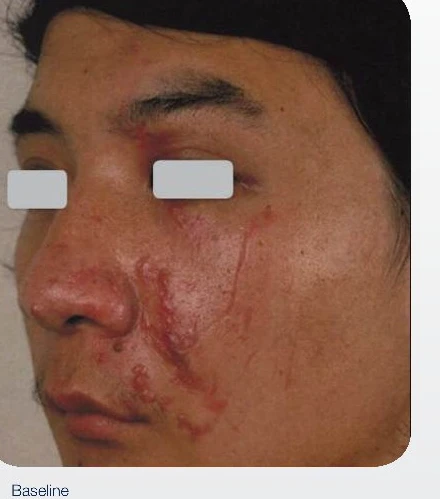 Before
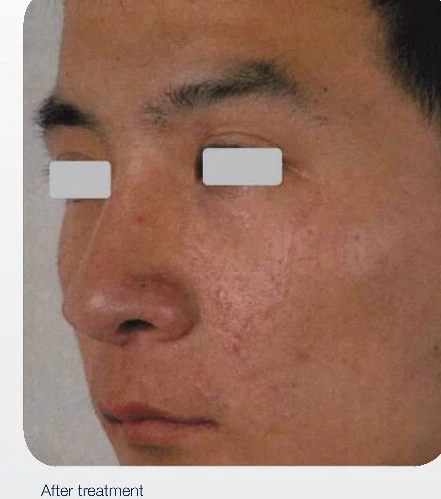 After
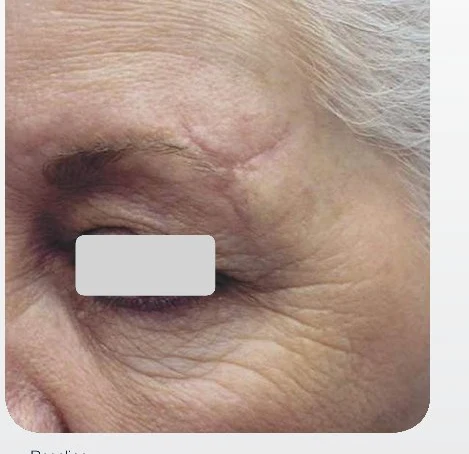 Before
 After
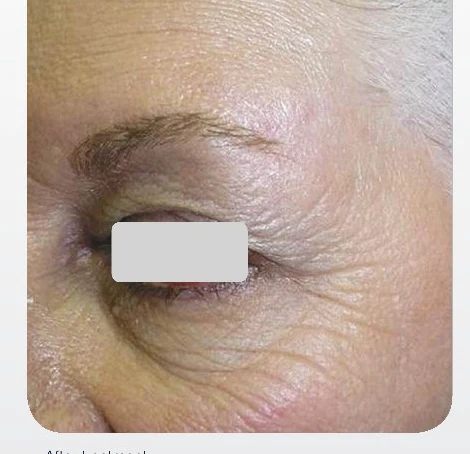
Representative manufacturer clinical photos, not Juniper Dermatology patients. Individual results vary.
When to see a dermatologist
If a scar bothers you — from acne, surgery, an injury, a burn, or one that's raised, red, or growing — it's worth having it assessed. Many scars respond best when treated earlier in their life, so there's no need to wait years. Schedule a visit and we'll build a personalized plan.
Schedule with JuniperCommon questions
Honestly, not usually — the goal of scar revision is to make a scar far less noticeable by improving its color, height, and texture so it blends into the surrounding skin, rather than erasing it entirely. With the right combination of treatments over time, many scars can be dramatically improved.
Almost all scar revision takes a series of treatments spaced weeks apart, and often combines more than one modality. The exact number depends on the scar's type, size, age, and how your skin responds. We'll give you a realistic estimate at your consultation and track progress with before-and-after photos.
Generally, no. Most scar treatments are considered cosmetic and are not covered by insurance, so they're typically an out-of-pocket investment. We'll always explain the expected number of sessions and the cost upfront, before anything is scheduled.
We use a full toolkit and combine it into a personalized plan: VBeam pulsed-dye laser and IPL for redness and discoloration; traditional microneedling and Pixel8 radiofrequency microneedling for texture; fractional CO2 laser for deeper resurfacing; and intralesional injections for raised, hypertrophic, and keloid scars. Most plans use more than one, staged over several sessions.
Acne scars, surgical and Mohs scars, traumatic and injury scars, burn scars, raised hypertrophic or keloid scars, red and discolored scars, and stretch marks (striae). Each scar type is approached differently, which is why the plan is individualized.
Yes. Stretch marks are a form of scarring, and while they can't always be fully erased, their appearance can be meaningfully improved — especially when they're still pink or red. We use vascular laser for the color and microneedling, radiofrequency microneedling, and fractional resurfacing to rebuild collagen and smooth the texture. Newer stretch marks respond best.
Comfort is a priority — we use numbing and tailor each treatment to the modality. Downtime varies: lighter treatments like VBeam have little to none, while deeper resurfacing can involve several days of redness and healing. We'll tell you exactly what to expect for your specific plan.
Education
Bend & Redmond · Central Oregon
Board-certified dermatology with same-week appointments — because no one should have to wait for expert care.