Symmetric patches
Brown to gray-brown patches, usually matched on both sides of the face.
Medical Dermatology
Melasma causes stubborn brown or gray-brown patches, most often on the face. It's very common and very treatable - but because the wrong treatment can make it darker, melasma rewards a careful, dermatologist-led approach.
✓ Medically reviewed by Dr. Karla Snider Pivik, DO, FAAD, FAOCD — board-certified dermatologist
Overview
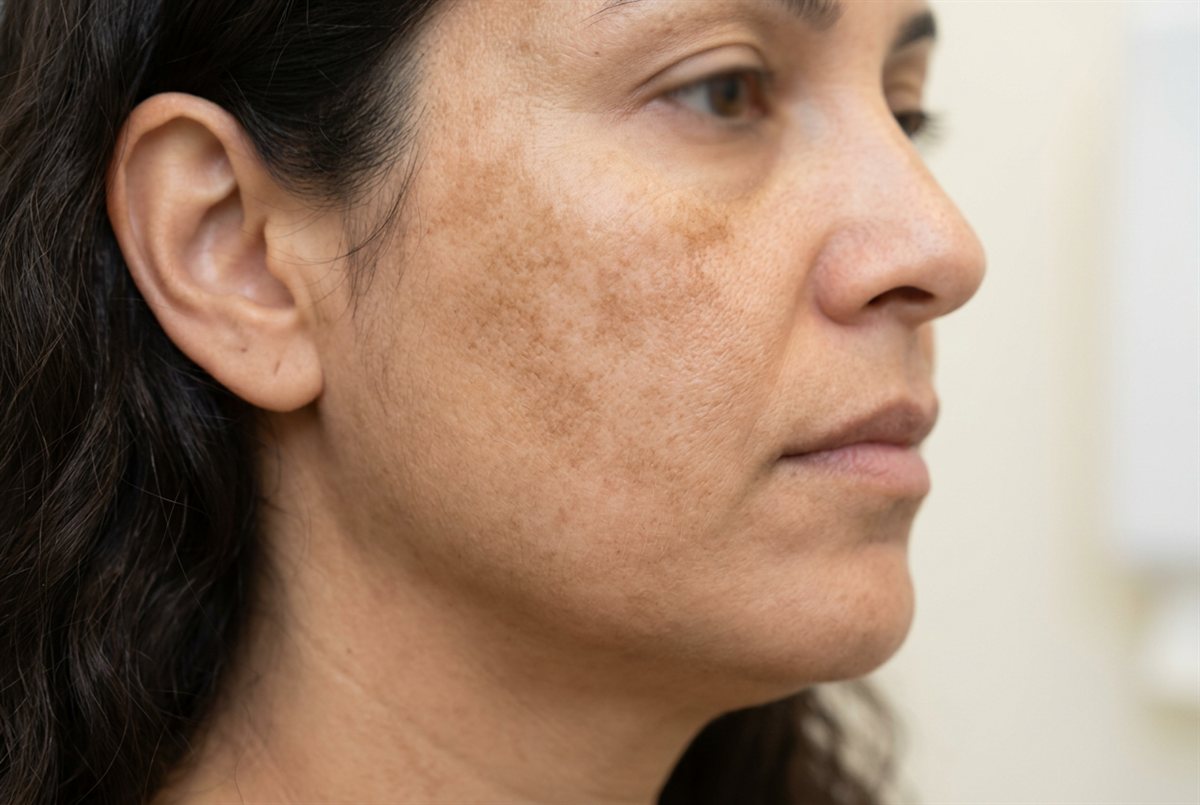
Melasma appears as symmetric patches of darker pigment, usually across the cheeks, forehead, upper lip, and bridge of the nose. It's driven by a combination of sun and visible light, hormones, heat, and genetics - which is why it's especially common in women, during pregnancy (the so-called “mask of pregnancy”), and with hormonal changes.
What makes melasma unique among dark spots is how easily it can be provoked. Heat and inflammation alone can push the pigment-producing cells to make more pigment - so a treatment that would fade an ordinary sun spot can actually deepen melasma. The goal isn't just to lighten patches; it's to calm the pigment pathway and protect your skin so results last.
Melasma is a medical condition, not just a cosmetic one. Who treats it - and how - genuinely changes the outcome:
Melasma is managed over time, not erased in a single visit. We build results gradually and protect them:
Melasma is where our medical and cosmetic care work hand in hand: prescription therapy calms the pigment, while carefully chosen options from our aesthetic dermatology menu - including our Cosmelan® depigmentation program and gentle, dermatologist-selected peels and lasers - refine and even your tone. Because the same dermatologists lead both, your cosmetic treatments are chosen to complement your melasma plan, not compromise it.
What melasma looks like
Brown to gray-brown patches, usually matched on both sides of the face.
Most common on the cheeks, forehead, upper lip, and nose.
Often triggered or worsened by pregnancy or hormonal changes.
UV and even visible light can deepen the pigment quickly.
How we treat it
Melasma is managed, not cured overnight - we build a steady, skin-safe plan, layer treatments thoughtfully, and protect your progress. Every plan is tailored to your skin type and the depth of your pigment.
Dermatologist-directed lightening agents - including hydroquinone and triple-combination formulas - to calm and fade pigment gradually, with structured, supervised use.
A leading advance in melasma care - topical, and for appropriate patients oral tranexamic acid - that targets the pigment and vascular pathways behind stubborn, recurrent melasma.
Modern options such as cysteamine and other tyrosinase inhibitors for long-term care or for patients who prefer an alternative to hydroquinone.
Broad-spectrum SPF with iron oxides to shield against visible light and heat - the cornerstone of any melasma plan and the key to holding results.
Carefully chosen peels that lift excess pigment gently - matched to your skin so they help rather than provoke a flare.
For the right candidate, gentle laser or light therapy chosen and dialed in by your dermatologist - using conservative settings, since aggressive lasers and IPL can worsen melasma.
A simple, skin-friendly routine to hold your results and keep patches from returning over time.
When to see a dermatologist
If brown patches aren't improving - or products or spa treatments seem to make them worse - a board-certified dermatologist can confirm the diagnosis and build a plan that fades pigment safely instead of provoking it.
Schedule with JuniperCommon questions
Melasma is managed rather than cured overnight. With a dermatologist-led plan - pigment-calming prescription therapy plus disciplined sun and visible-light protection - patches fade gradually, and a maintenance routine keeps them from returning.
Melasma is highly sensitive to heat and light, so aggressive lasers, IPL, and generic device settings can trigger a rebound that leaves skin darker than before - especially in deeper skin tones. A board-certified dermatologist first confirms the diagnosis, then chooses gentle, appropriate treatments and can manage any flare. Because our dermatologists lead both the medical and cosmetic sides, cosmetic treatments are selected to help your melasma, not risk it.
Yes - tranexamic acid has become one of the most valuable tools in melasma care. Used topically, and in appropriate patients orally, it targets the pigment and vascular pathways behind stubborn melasma and works well alongside prescription topicals. Your dermatologist determines whether oral therapy is right and safe for you.
Melasma is driven by sun and visible light, hormones, heat, and genetics, so it can flare with UV exposure, hormonal changes, and even heat. Consistent broad-spectrum sunscreen with iron oxides and a maintenance routine are essential to holding your results.
They can help the right patient, but only with the correct device and conservative settings - the wrong laser can worsen melasma. That's why laser is used as one carefully chosen part of a broader, dermatologist-led plan, with candidacy determined by your dermatologist rather than a one-size-fits-all menu.
Bend & Redmond · Central Oregon
Board-certified dermatology with same-week appointments — because no one should have to wait for expert care.