Tiny rough bumps
Small, painless bumps that give the skin a sandpaper-like texture.
Medical Dermatology
Those tiny rough bumps on the backs of your arms or thighs are almost always keratosis pilaris - harmless, very common, and very manageable with the right routine.
✓ Medically reviewed by Dr. Karla Snider Pivik, DO, FAAD, FAOCD — board-certified dermatologist

Overview
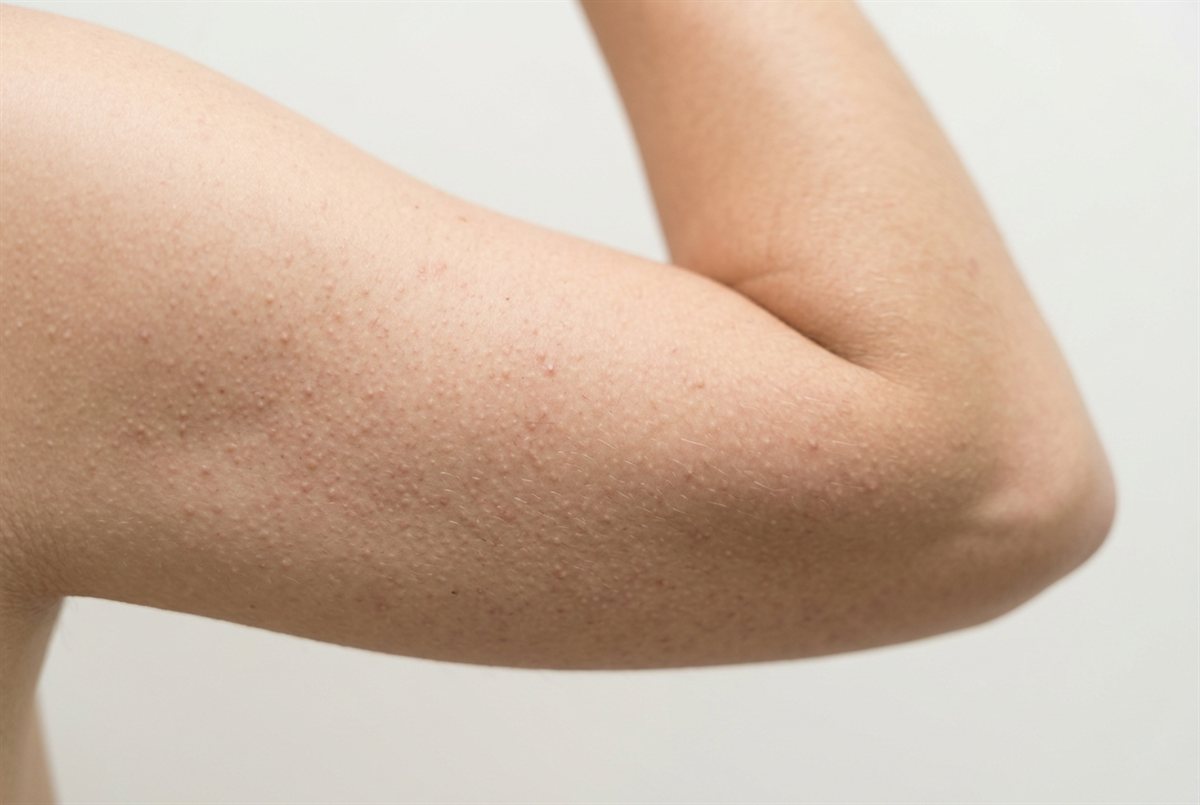
Keratosis pilaris - often nicknamed 'chicken skin' - is an extremely common, harmless condition that shows up as small, rough bumps, most often on the backs of the upper arms, the thighs, the buttocks, and sometimes the cheeks. The skin can feel like fine sandpaper, and the bumps are sometimes surrounded by a little pink or red. It's not painful or contagious, and it doesn't signal anything wrong with your health.
The bumps form when keratin - a protein that protects the skin - builds up and plugs the hair follicles, trapping the tiny hairs beneath. It tends to run in families, is more noticeable in drier weather (hello, Central Oregon winters), and is especially common in children, teens, and young adults. Many people find it improves on its own with age.
Keratosis pilaris can't be permanently cured, but it responds well to the right skincare - and a dermatologist can help you get real results instead of guessing in the drugstore aisle. The goal is simple: smoother, softer skin and less redness, with a routine that's easy to keep up.
Keratosis pilaris improves with consistency, not aggression. A dermatologist-guided routine focuses on:
Keratosis pilaris is harmless, so treatment is optional - but it's worth a visit if:
Signs & symptoms
Small, painless bumps that give the skin a sandpaper-like texture.
Most often the backs of the upper arms, the thighs, the buttocks, and sometimes the cheeks.
The bumps are sometimes surrounded by mild pink or red, especially on fair skin.
Often more noticeable in winter or dry climates, and can improve in humid months.
Most people have no symptoms beyond the texture, though it can occasionally itch.
It's frequently inherited and often starts in childhood or the teen years.
How we treat it
Keratosis pilaris is managed rather than cured - so we build a simple, sustainable routine that smooths the bumps, softens the skin, and calms redness.
Targeted products with urea, lactic acid, salicylic acid, or glycolic acid to gently dissolve the keratin plugs behind the bumps.
Stronger prescription creams (such as topical retinoids or higher-strength urea) when over-the-counter options aren't enough.
Rich, dermatologist-recommended moisturizers to soften rough texture and support the skin barrier - especially in dry weather.
Options to calm the persistent pink or red around the bumps, particularly on the cheeks and arms.
A realistic, easy-to-maintain plan - because consistency is what actually keeps the skin smooth.
Confirming it's keratosis pilaris and not acne, eczema, or another look-alike, so you're treating the right thing.
When to come in
If those rough bumps bother you, haven't improved with drugstore products, or you're just not sure what they are, a dermatologist can confirm it's keratosis pilaris and set you up with a simple routine that actually works. It's harmless - so treating it is entirely about what makes you comfortable in your skin.
Schedule with JuniperCommon questions
Keratosis pilaris is a very common, harmless skin condition that causes small, rough bumps - often called 'chicken skin' - most often on the backs of the upper arms, thighs, buttocks, and sometimes the cheeks. It happens when keratin builds up and plugs the hair follicles. It isn't painful, contagious, or a sign of any underlying health problem.
There's no permanent cure, but it's very manageable and often improves with age. With the right routine - gentle exfoliation, good moisturizing, and sometimes prescription treatments - you can smooth the bumps and reduce redness significantly. Because it's a tendency in the skin, keeping up a simple maintenance routine is what keeps it under control.
The most effective approach combines gentle chemical exfoliation (ingredients like urea, lactic acid, salicylic acid, or glycolic acid) with rich moisturizing - and avoiding harsh scrubbing or picking, which makes it worse. If over-the-counter products aren't working, a dermatologist can prescribe stronger options and help with any redness. We'll tailor a routine to your skin.
No, though they can look similar. Acne involves oil, clogged pores, and inflammation and often comes with whiteheads, blackheads, or pimples, while keratosis pilaris is a buildup of keratin in the hair follicles that creates uniform, rough little bumps - usually without the pus or larger pimples of acne. Getting the right diagnosis matters, because the treatments are different.
Dry air makes keratosis pilaris more noticeable, so it commonly flares in cold, dry weather - which is why many people in Central Oregon notice it more in winter. Consistent moisturizing and gentle exfoliation through the drier months help keep the skin smoother.
Bend & Redmond · Central Oregon
Board-certified dermatology with same-week appointments — because no one should have to wait for expert care.