Flaking
White or yellowish flakes on the scalp, hair, or shoulders - sometimes greasy rather than dry.
Medical Dermatology
Persistent flaking and itching usually isn't dry scalp - it's often seborrheic dermatitis, driven by a common scalp yeast. A dermatologist can calm it and keep it under control.
✓ Medically reviewed by Dr. Karla Snider Pivik, DO, FAAD, FAOCD — board-certified dermatologist
Overview
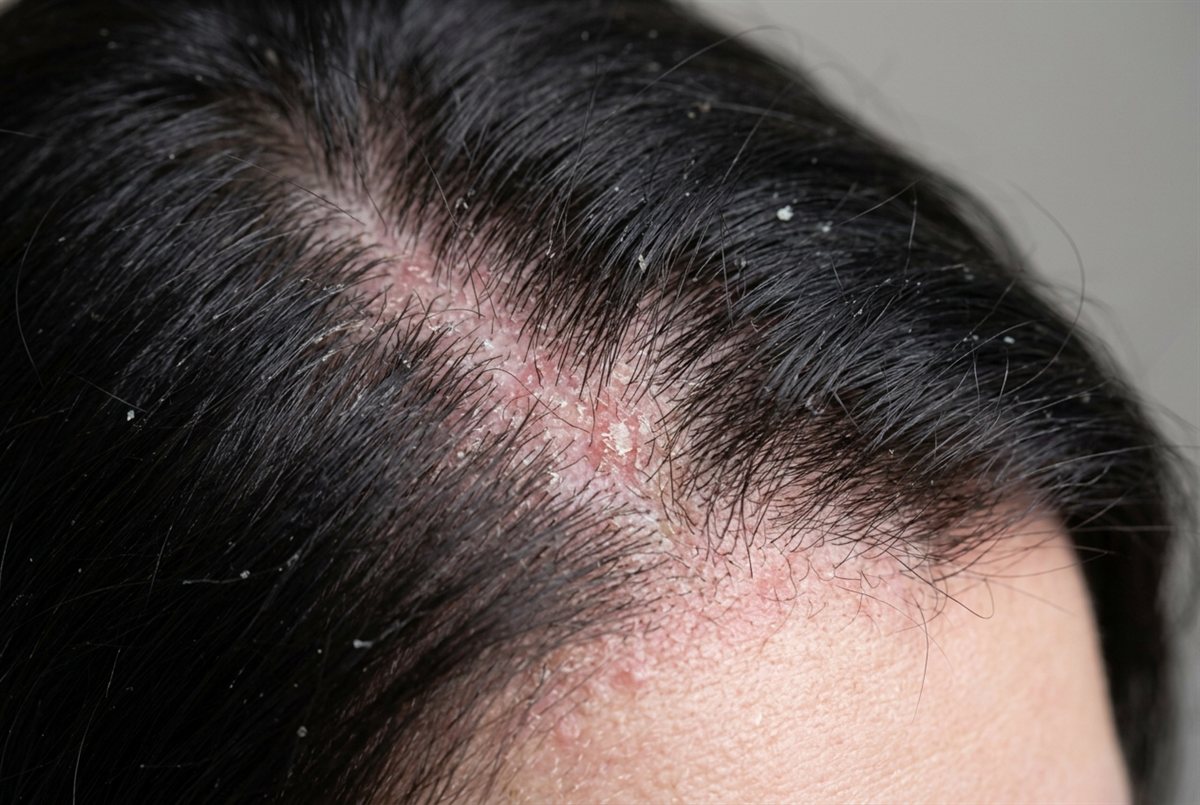
Dandruff and its more inflamed form, seborrheic dermatitis, cause flaking, itching, and redness on oil-rich skin - most often the scalp, but also the eyebrows, the creases beside the nose, the ears, the beard, and sometimes the chest. It's a chronic condition that tends to come and go, flaring with stress, cold or dry weather, and seasonal changes.
The key driver isn't poor hygiene - it's a yeast called Malassezia that lives on everyone's skin. In people prone to dandruff, this yeast feeds on scalp oils and leaves behind irritants that speed up skin-cell turnover, producing visible flakes and inflammation. Over-the-counter shampoos help many people, but stubborn, spreading, or facial cases respond best to a dermatologist-guided plan - including newer prescription options that weren't available even a few years ago.
Dandruff has a real, treatable cause - and clearing up the myths is the first step to clearing your scalp:
Drugstore shampoos work for many people. See a dermatologist when they don't - or when it spreads beyond the scalp:
Signs & symptoms
White or yellowish flakes on the scalp, hair, or shoulders - sometimes greasy rather than dry.
An itchy scalp that can be persistent or come in waves.
Pink, scaly patches - often on the face, brows, sides of the nose, or ears.
Flaking and redness can appear in the beard or on the mid-chest, not just the scalp.
Thick, yellow, scaly patches on an infant's scalp - a common, harmless form we can guide you through.
Symptoms that improve, then return with stress, weather, or season changes.
How we treat it
Seborrheic dermatitis is managed rather than cured - so we calm the current flare, then set up a simple, sustainable routine that keeps it away.
Prescription-strength ketoconazole, ciclopirox, and selenium sulfide that go well beyond the drugstore aisle - targeting the Malassezia yeast at the root of the problem.
A newer, steroid-free FDA-approved foam - the first new seborrheic dermatitis medication in two decades - that can ease itch within days and suits all hair types.
Treatments to lift stubborn, built-up scale so the medicated products can actually reach the skin.
Short-term steroid and steroid-free (calcineurin-inhibitor) options to calm severe itching and redness, including on delicate facial skin.
Gentle, targeted care for seborrheic dermatitis around the nose, brows, ears, and beard - where scalp shampoos alone aren't the answer.
A simple, sustainable plan - often intermittent medicated shampoo - to keep flaking and itch from coming back.
When to see a dermatologist
If flaking and itching won't clear with over-the-counter shampoos, keep coming back, or are spreading to your face, brows, ears, or beard, a dermatologist can get it under control and keep it there.
Schedule with JuniperCommon questions
Usually not. Persistent flaking, itching, and redness are most often seborrheic dermatitis - an inflammatory condition driven by the Malassezia yeast - rather than simple dry scalp. That's why it responds to targeted antifungal and anti-inflammatory treatment rather than ordinary moisturizing, and why over-washing can actually make it worse.
The main driver is Malassezia, a yeast that naturally lives on everyone's skin. In people who are prone to it, the yeast feeds on scalp oils and leaves behind irritants that speed up skin-cell turnover, causing flaking and inflammation. It is not caused by poor hygiene. Stress, cold or dry weather, hormones, and certain health conditions can trigger flares.
We use prescription-strength antifungal shampoos (ketoconazole, ciclopirox, selenium sulfide), salicylic acid to lift stubborn scale, and anti-inflammatory topicals for redness and itch. For persistent cases we may add ZORYVE® (roflumilast) foam - a newer, steroid-free FDA-approved option - along with a maintenance routine to prevent flare-ups.
Yes. It commonly shows up on the eyebrows, the creases beside the nose, the ears, the beard, and sometimes the chest. Facial and beard involvement needs a gentler approach than scalp shampoos alone, which is exactly the kind of plan a dermatologist tailors for you.
Seborrheic dermatitis is a chronic condition that's managed rather than permanently cured - but with the right plan it's very controllable. Most people get clear or nearly clear and stay that way with a simple maintenance routine.
Bend & Redmond · Central Oregon
Board-certified dermatology with same-week appointments — because no one should have to wait for expert care.