Smooth lump under the skin
A round, movable bump you can feel beneath the surface, often on the face, neck, trunk, back, or scalp.
Medical Dermatology
That smooth lump under your skin that comes and goes - or slowly grows - is often a cyst. Most are harmless, but when one gets tender, keeps flaring, or you'd simply rather it were gone, we can remove it cleanly.
✓ Medically reviewed by Dr. Karla Snider Pivik, DO, FAAD, FAOCD — board-certified dermatologist

Overview
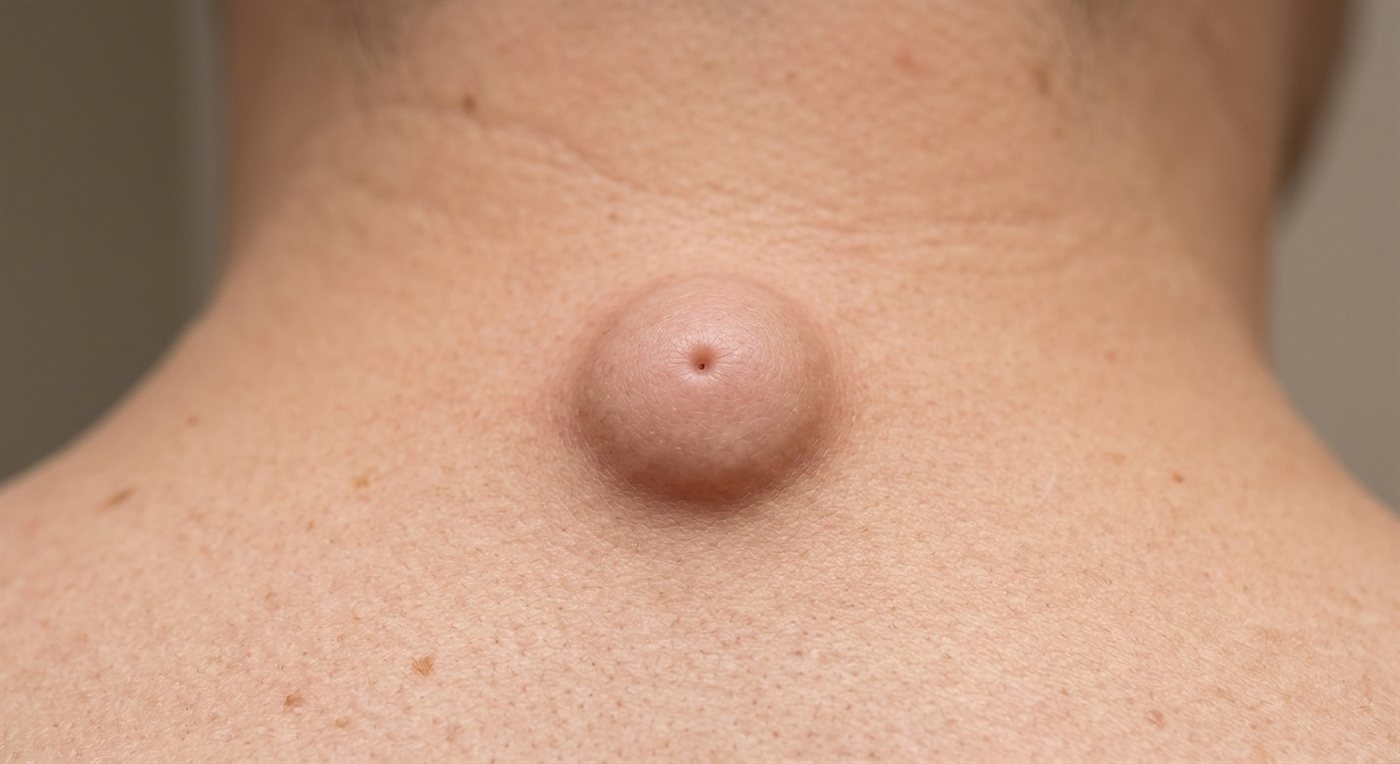
A cyst is a closed sac beneath the skin, usually filled with keratin (the protein your skin makes) or a soft, cheesy material. The most common types are epidermoid cysts - often loosely called sebaceous cysts - and pilar cysts, which tend to run in families and form on the scalp. They usually feel like a smooth, round, movable lump, and epidermoid cysts frequently have a tiny dark central pore (a punctum) on the surface.
Most cysts are completely benign and painless, and many can simply be watched. But they can become inflamed, tender, red, or infected - sometimes draining a thick, foul-smelling material - and some slowly enlarge over months to years. Squeezing or picking at a cyst tends to make things worse: it can rupture the sac, trigger inflammation, and set up a cycle of flares.
When a cyst is bothersome, recurring, cosmetically unwelcome, or in an awkward spot, the definitive fix is removing the entire sac wall. If any lining is left behind, the cyst can simply refill and return - so a proper in-office removal that takes out the whole sac is what keeps it from coming back. We'll confirm what it is, treat any active inflammation first if needed, and plan removal so it heals neatly.
Popping a cyst at home usually backfires. Here's why we'd rather you leave it alone:
The goal isn't just to drain a cyst - it's to take out the whole sac so it doesn't return:
A lump under the skin can be a simple cyst, a skin tag or other benign growth, or something that warrants closer evaluation - and cysts in body folds sometimes overlap with hidradenitis suppurativa. An exam sorts it out.
Signs & symptoms
A round, movable bump you can feel beneath the surface, often on the face, neck, trunk, back, or scalp.
Epidermoid cysts often show a tiny dark opening (punctum) at the center.
Many enlarge gradually over months to years rather than appearing overnight.
Can become red, swollen, and sore when inflamed or infected.
A ruptured or infected cyst may drain a thick, cheesy, foul-smelling material.
May settle down and then flare again, especially if squeezed or irritated.
How we treat it
Not every cyst needs treatment - but when one is tender, recurring, growing, or unwanted, we remove it in the office and take out the whole sac so it's far less likely to come back.
An exam confirms it's a benign cyst and not another kind of lump; we check anything that looks or behaves unusually.
A small, painless cyst that isn't bothering you can safely be left alone and monitored.
An acutely red, swollen cyst may be treated first - sometimes with an injection or drainage - to settle inflammation before removal.
The definitive fix: a quick in-office removal under local anesthesia that takes out the entire sac wall so it's less likely to recur.
We plan the incision and closure to heal as neatly as possible, especially on the face and other visible areas.
Removed tissue can be sent to pathology when anything warrants a closer look, for your peace of mind.
When to come in
Come in if a lump is growing, tender, red, or draining, if a cyst keeps flaring, or if you'd simply like one removed. Also have any new or changing lump checked to confirm what it is - most are harmless cysts, but it's worth knowing for sure. Try not to squeeze it in the meantime; that tends to make removal harder.
Schedule with JuniperCommon questions
"Sebaceous cyst" is the everyday term most people use, but the majority are actually epidermoid cysts - a closed sac under the skin filled with keratin. True sebaceous cysts (which come from oil glands) are less common. Either way, they feel like a smooth, movable lump, are usually benign, and are removed the same way: by taking out the whole sac.
We strongly recommend against it. Squeezing rarely empties a cyst completely, leaves the sac behind so it refills, and often ruptures it - driving inflammation into the surrounding skin and raising the risk of infection and scarring. An inflamed, ruptured cyst is also harder to remove cleanly later. If a cyst bothers you, it's much better to have it evaluated and removed properly.
Some cysts stay small and quiet for years, and a few drain and flatten temporarily - but because the sac remains, they usually refill and come back. A cyst won't truly disappear unless the sac itself is removed. If it isn't causing problems, watching it is perfectly reasonable; if it's tender, growing, or unwanted, removal is the lasting fix.
Removal is a quick in-office procedure done under local anesthesia. After numbing the area, we remove the entire cyst sac through a small incision and close it to heal as neatly as possible. Taking out the whole sac wall is the key step - if any lining is left behind, the cyst can return. If a cyst is acutely inflamed, we may calm it down first and remove it once it has settled.
When the entire sac is removed, recurrence is uncommon. Cysts most often come back when they were only drained or when part of the sac lining was left behind - which is exactly why we remove the whole sac rather than just emptying it. Occasionally a new cyst can form nearby, but a properly excised cyst usually doesn't return in the same spot.
Bend & Redmond · Central Oregon
Board-certified dermatology with same-week appointments — because no one should have to wait for expert care.