Small & soft
Tiny, soft growths that are usually painless and easy to move.
Medical Dermatology
Skin tags are harmless, but they can catch, snag, or simply bother you. A dermatologist can remove them quickly and cleanly - and make sure it's truly a skin tag and nothing more.
✓ Medically reviewed by Dr. Karla Snider Pivik, DO, FAAD, FAOCD — board-certified dermatologist
Overview
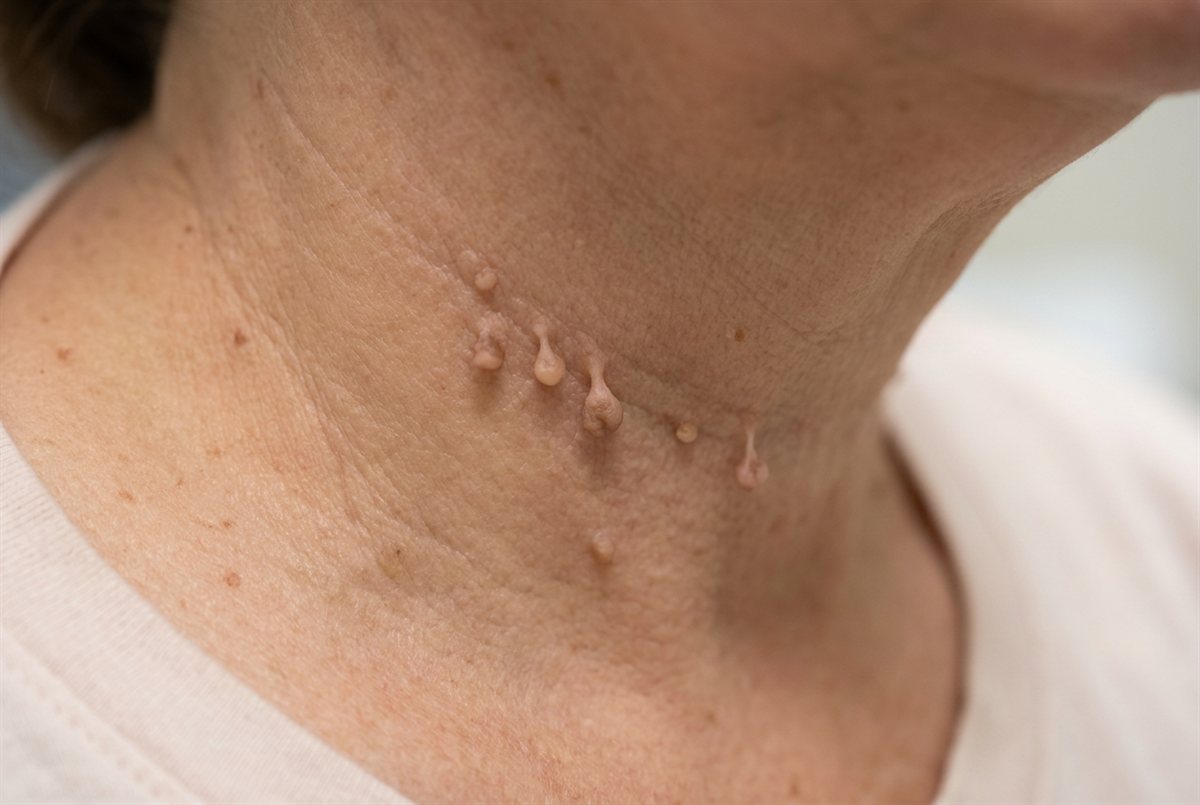
Skin tags (acrochordons) are small, soft, flesh-colored or slightly darker growths that hang from the skin on a thin stalk. They're extremely common and completely benign - they aren't cancerous and they don't turn into cancer. Most people develop at least a few over time, especially where skin rubs against skin or clothing.
They show up most often on the neck, underarms, eyelids, under the breasts, and in the groin. They're more common with age, during pregnancy, in people who carry extra weight, and they can run in families. Skin tags don't usually cause symptoms, but they can become irritated, tender, or even bleed if they catch on jewelry, clothing, or a razor.
Because they're harmless, removing a skin tag is usually optional - a matter of comfort or appearance. But it's worth having new growths looked at, because a dermatologist can confirm it's actually a skin tag and not something that just resembles one. When you do want a tag gone, in-office removal is quick, safe, and far better than any drugstore kit or home remedy.
Online and drugstore skin-tag kits, bands, and 'freezing' pens are a common source of trouble. Here's why in-office removal is the safer choice:
Most skin tags are obvious and benign, but see a dermatologist if a growth:
A skin tag can look like other growths, so it helps to know how we approach moles and other skin lesions. For cosmetic removals, our aesthetic dermatology team can help too.
What skin tags look like
Tiny, soft growths that are usually painless and easy to move.
Often hang from a thin stalk (peduncle) rather than sitting flat on the skin.
Skin-colored or slightly darker than the surrounding skin.
Most common on the neck, underarms, eyelids, under the breasts, and the groin.
May become tender or bleed if they catch on clothing, jewelry, or a razor.
Many people have several, and tend to develop more with age.
How we treat it
Removal is quick and done right in the office. We match the method to the tag's size and location - and always with a good cosmetic result in mind.
Small tags are precisely trimmed at the base with sterile instruments - fast, and typically with little to no discomfort.
Freezing with liquid nitrogen to remove a tag, well suited to certain sizes and locations.
Using targeted heat to remove a tag and seal the area, which can minimize bleeding.
Numbing when appropriate, so removal is comfortable - especially for sensitive areas like the eyelids or neck.
Every growth is examined first to confirm it's a benign skin tag and not a look-alike that needs different care.
Simple instructions to help the area heal cleanly and keep the cosmetic result looking its best.
When to come in
Come in if a skin tag is catching, bleeding, or irritated, if you'd simply like one removed for comfort or appearance, or if a growth is new, changing, or looks different from your others. Please don't try to remove tags at home - especially near the eyes - where kits risk bleeding, infection, and scarring.
Schedule with JuniperCommon questions
Skin tags develop where skin rubs against skin or clothing, which is why they favor the neck, underarms, eyelids, under the breasts, and the groin. They become more common with age, during pregnancy, and in people who carry extra weight, and there's often a family tendency. They're harmless and not caused by anything you did wrong.
No - skin tags are benign. They aren't cancerous and don't turn into cancer. That said, other growths can occasionally resemble a skin tag, so it's worth having a new or changing bump checked by a dermatologist to be sure it's truly a skin tag before assuming so.
We'd strongly recommend against it. Home kits, bands, and freezing pens can cause bleeding, infection, and scarring - and are especially risky near the eyes. Cutting or tying off a tag yourself also means it never gets examined. In-office removal is quick, safe, and gives a much better cosmetic result.
In the office, depending on the tag's size and location, we may snip it at the base with sterile instruments, freeze it with cryotherapy, or use electrosurgery. Each takes just minutes, and we numb the area when appropriate so it's comfortable. We'll also give you simple aftercare so it heals cleanly.
A properly removed skin tag doesn't grow back in the same spot. However, if you're prone to skin tags, you may form new ones over time in the same friction-prone areas - those are new tags, not a regrowth of the old one, and they can be removed the same way.
Bend & Redmond · Central Oregon
Board-certified dermatology with same-week appointments — because no one should have to wait for expert care.