Pain before the rash
Burning, tingling, itching, or sharp pain in one area - often a day or two before any rash shows up.
Medical Dermatology
Shingles is a painful, blistering rash that usually wraps around one side of the body. Treatment works best when it's started early - ideally within 72 hours - so don't wait to be seen.
✓ Medically reviewed by Dr. Karla Snider Pivik, DO, FAAD, FAOCD — board-certified dermatologist

Overview
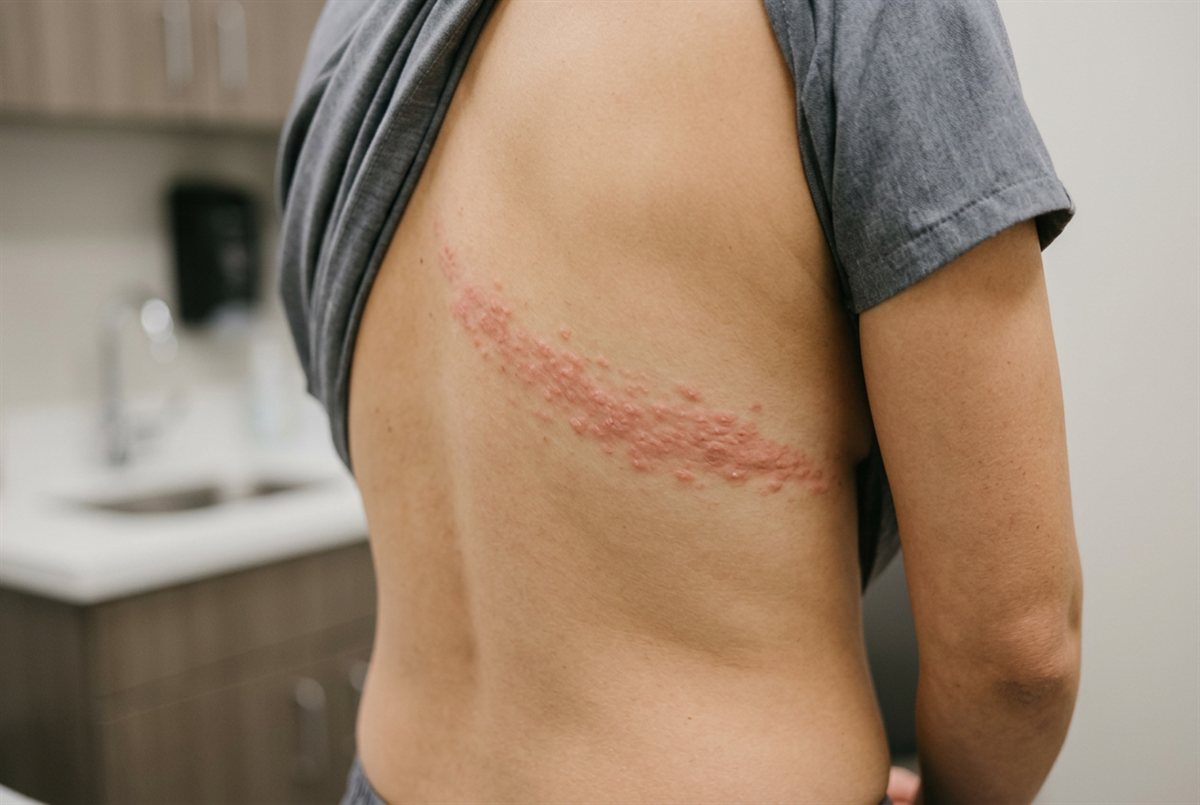
Shingles (herpes zoster) is a reactivation of the same virus that causes chickenpox - varicella-zoster. After chickenpox, the virus stays dormant in your nerves for decades. Years later, often when the immune system is stressed or simply older, it can reawaken and travel along a single nerve to the skin, producing a painful, blistering rash in a distinct band on one side of the body.
The rash almost always respects the midline - it appears on the left or the right, not both - most often across the torso, but sometimes on the face, neck, or near an eye. Many people feel burning, tingling, itching, or sharp pain in the area a day or two before any rash appears, which is one reason shingles is easy to miss at first.
Shingles is best treated quickly. Antiviral medication is most effective when it's started within about 72 hours of the rash appearing - it can shorten the outbreak, ease the pain, and lower the risk of lingering nerve pain afterward. If you think you have shingles, it's worth being seen right away rather than waiting it out.
Shingles is one condition where timing genuinely changes the outcome. Starting antivirals early can:
Most shingles is treated in the office, but some situations need urgent care. Seek care immediately if you have:
Signs & symptoms
Burning, tingling, itching, or sharp pain in one area - often a day or two before any rash shows up.
A stripe or band of rash on just one side of the body that doesn't cross the midline.
Groups of small fluid-filled blisters on a red base that later crust over.
Aching, stabbing, or electric-shock-like pain, sometimes with sensitivity to light touch.
Itching, numbness, or a pins-and-needles feeling in the affected skin.
Some people have headache, fatigue, mild fever, or light sensitivity along with the rash.
How we treat it
The priorities are simple: start antivirals fast, control the pain, and protect against complications - then check in on healing.
Prescription antivirals (such as valacyclovir, acyclovir, or famciclovir) started as early as possible - ideally within 72 hours - to shorten the outbreak and reduce complications.
A pain plan tailored to you, from anti-inflammatories to prescription options and nerve-pain medications for more severe cases.
Guidance on soothing the rash, caring for blisters, and preventing a secondary bacterial infection while the skin heals.
If nerve pain lingers after the rash clears, we treat it with topical and oral options - and coordinate further care when needed.
If the rash involves the eye or other high-risk areas, we help arrange urgent, appropriate care right away.
Once you've recovered, we'll talk about the Shingrix vaccine, which is recommended for most adults 50 and older to help prevent shingles and its complications.
When to come in
If you have a new, painful rash on one side of your body - or burning, tingling pain followed by blisters - be seen right away, ideally within 72 hours, so antiviral treatment can start early. Any rash on or near the eye is urgent: don't wait.
Schedule with JuniperCommon questions
Shingles typically starts as burning, tingling, or painful skin on one side of the body, followed within a day or two by a band of red skin and clusters of small fluid-filled blisters. The rash stays on one side and doesn't cross the midline - most often on the torso, but sometimes the face or neck. The blisters crust over within about a week to ten days.
As soon as possible - ideally within 72 hours of the rash appearing. Antiviral medicine works best when started early: it can shorten the outbreak, ease the pain, and lower the risk of long-term nerve pain (postherpetic neuralgia). If you suspect shingles, don't wait to be seen.
You can't catch shingles from someone else. However, a person with an active shingles rash can spread the varicella-zoster virus to someone who has never had chickenpox or the chickenpox vaccine - and that person could develop chickenpox, not shingles. The virus spreads through contact with the blister fluid, so keeping the rash covered until it crusts over helps protect others, especially newborns, pregnant people, and anyone with a weakened immune system.
It's nerve pain that can persist in the area of the rash for months - or occasionally longer - after the skin has healed. It's the most common complication of shingles, and the risk goes up with age. Starting antiviral treatment early lowers the chance of developing it, and if it does occur, there are effective treatments we can offer.
Yes - the Shingrix vaccine is highly effective and recommended for most adults ages 50 and older, as well as some younger adults with weakened immune systems. It's given as two doses and substantially lowers the risk of both shingles and postherpetic neuralgia. Once you've recovered from an outbreak, we can talk about the right timing for vaccination.
Shingles is a reactivation of the chickenpox virus that has stayed dormant in your nerves. It's more likely as we get older or when the immune system is stressed by illness, certain medications, or major life stress. Most people have shingles only once, but it can recur - which is another reason vaccination is worth discussing.
Bend & Redmond · Central Oregon
Board-certified dermatology with same-week appointments — because no one should have to wait for expert care.