Dome-shaped bumps
Small, smooth, firm bumps - flesh-colored to pearly-pink, usually 2-5 mm across.
Medical Dermatology
Those small, pearly bumps that keep spreading on your child's skin are usually molluscum contagiosum - harmless, very common, and something we can help with when it's bothersome.
✓ Medically reviewed by Dr. Karla Snider Pivik, DO, FAAD, FAOCD — board-certified dermatologist

Overview
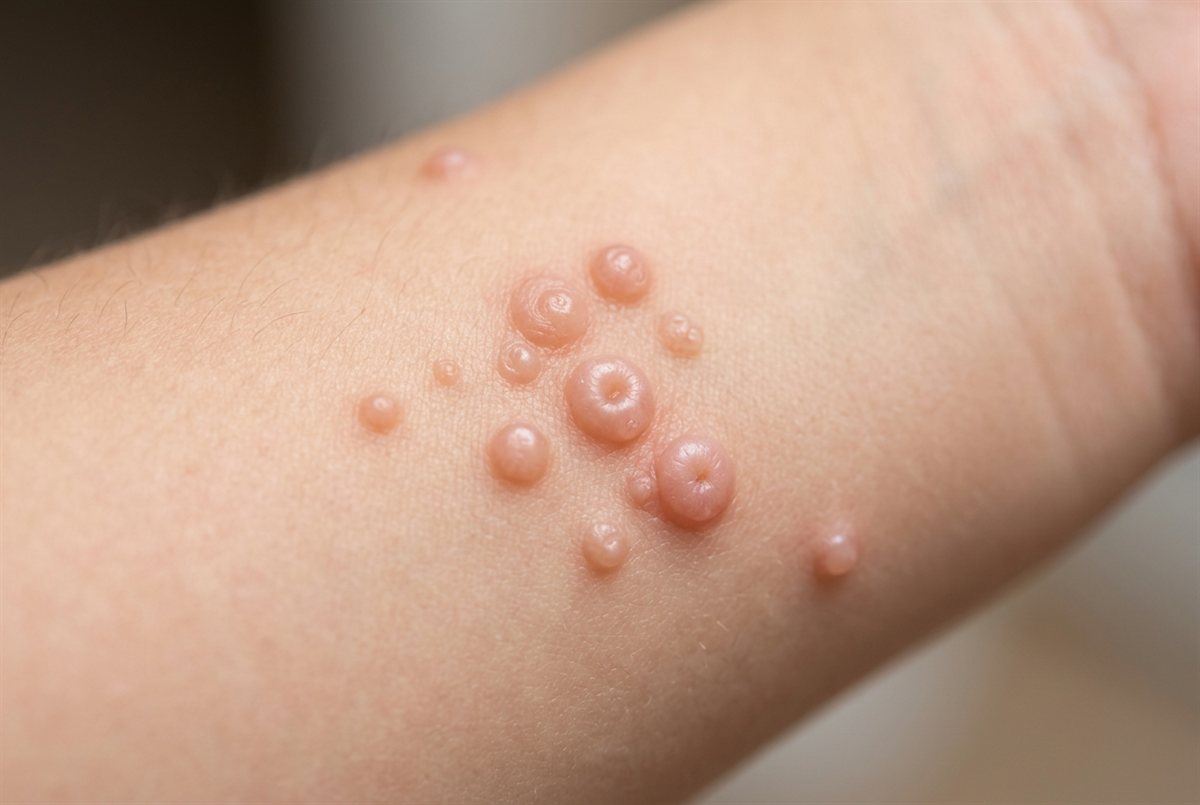
Molluscum contagiosum is a common viral skin infection that causes small, smooth, dome-shaped bumps - often with a tiny dimple in the center. They're usually flesh-colored to pearly-pink and can show up anywhere, commonly on the trunk, arms, legs, armpits, and the backs of the knees. It's especially common in children, and while it can look alarming as it spreads, it's harmless.
The virus spreads easily through skin-to-skin contact and shared items like towels, and can also spread from one part of the body to another through scratching. Because of that, one or two bumps often turn into a cluster over time. The good news: molluscum is self-limited - in a healthy person it clears on its own, though that can take many months to a couple of years, which is often longer than families want to wait.
Treatment is a personal choice. Many mild cases can simply be watched, but we often recommend treating when the bumps are spreading, itchy or irritated, in a bothersome or visible spot, or when you'd rather not wait it out - and there's now an FDA-approved in-office treatment. We'll walk you through the options and help you decide what makes sense for your child (or yourself), gently and without unnecessary discomfort.
Molluscum is harmless and eventually clears on its own, so treatment is optional. We often suggest treating when:
Molluscum spreads easily, so a few simple habits help - for your child and everyone around them:
Molluscum is sometimes confused with warts or other bumps - it helps to know how we handle skin lesions. Irritated skin and eczema can make it spread more easily.
Signs & symptoms
Small, smooth, firm bumps - flesh-colored to pearly-pink, usually 2-5 mm across.
Many have a tiny pit or dimple in the middle, a classic molluscum clue.
Often start as one or two and multiply, sometimes in a line from scratching.
Trunk, arms, legs, armpits, and backs of the knees; can appear almost anywhere.
Typically don't hurt, though they can itch or become red and irritated.
Most common in children, but adults get it too, including through close contact.

How we treat it
Because molluscum clears on its own, watchful waiting is always an option. When you'd like to treat, we offer gentle, effective choices - and we'll tailor them to a child's comfort.
For mild cases, simply monitoring while the infection runs its course - a perfectly valid, low-stress choice.
An FDA-approved in-office topical (a standardized beetle-derived 'blistering' agent) applied to the bumps, then washed off at home - no needles.
Freezing individual bumps with liquid nitrogen - quick and effective for cooperative patients.
Gently removing bumps in the office, sometimes with numbing cream first for comfort.
At-home creams (such as retinoids or other agents) for widespread bumps or to use between visits.
Managing surrounding eczema or irritation, which helps molluscum settle and stops the scratch-and-spread cycle.
When to come in
Come in if the bumps are spreading, itchy or irritated, in a bothersome spot, or you'd simply like them gone rather than waiting many months. It's also worth a visit to confirm it's molluscum and not something else, and promptly if any bump becomes very red, swollen, or painful, which can signal infection.
Schedule with JuniperCommon questions
It's a common, harmless viral skin infection that causes small, smooth, dome-shaped bumps - often with a tiny central dimple. It's caused by a poxvirus and is especially common in children. The bumps can appear anywhere but favor the trunk, arms, legs, armpits, and backs of the knees. Though it can spread and linger, it doesn't cause any serious health problems in healthy people.
Yes. In a healthy person, molluscum is self-limited and clears without treatment - but it often takes many months, and sometimes up to two years, for every bump to resolve. During that time it can spread to new areas or to other people. Because the wait can be long, many families choose treatment to speed things along, especially when bumps are spreading or bothersome.
Options range from simply watching and waiting to active treatment. There's now an FDA-approved in-office topical (Ycanth®/cantharidin) applied to the bumps with no needles, plus cryotherapy (freezing), gentle curettage (removal), and at-home prescription creams for widespread cases. We match the approach to the number of bumps, their location, and - for kids - comfort, keeping treatment as gentle as possible.
It is contagious, spreading through skin-to-skin contact, shared towels or bath water, and scratching that moves it to new spots. That said, children can generally still attend school, daycare, and most activities - the key is discouraging scratching, keeping bumps covered when practical, and not sharing towels. We'll give you specific guidance for sports like swimming or wrestling.
Discourage picking and scratching, which is the main way it spreads to new areas. Avoid sharing towels, washcloths, and bath water; keep bumps covered when it's practical; and keep skin moisturized, since dry or eczema-prone skin spreads more easily. Treating the bumps also reduces spread. These simple habits protect both your child and the people around them.
Bend & Redmond · Central Oregon
Board-certified dermatology with same-week appointments — because no one should have to wait for expert care.