Raised welts
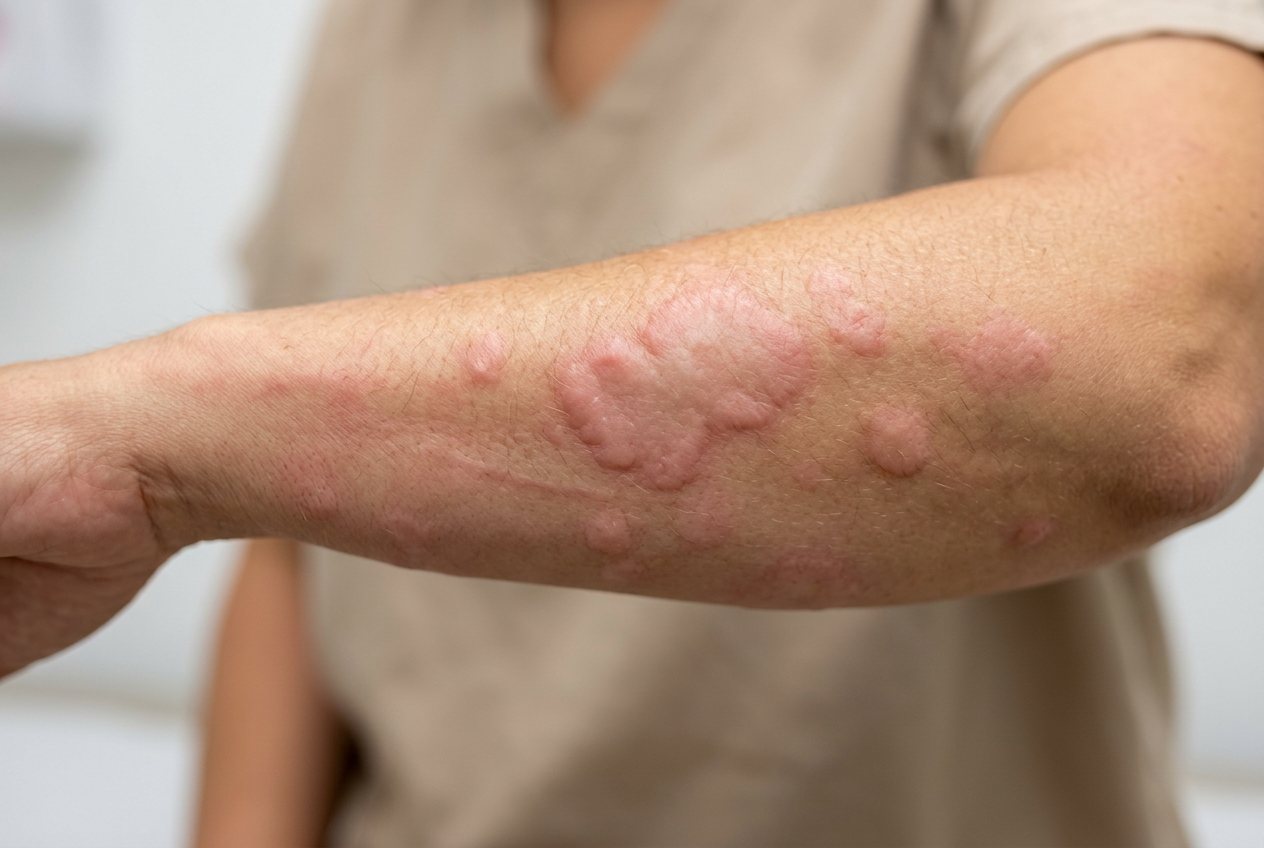
Pink or skin-colored bumps and patches that can change shape and location; the center may blanch (turn white) when pressed.
Medical Dermatology
Hives are itchy, raised welts that can appear suddenly and come and go. When they keep returning, a dermatologist can bring real relief - even when the cause can't be pinned down.
✓ Medically reviewed by Dr. Karla Snider Pivik, DO, FAAD, FAOCD — board-certified dermatologist
Overview
Hives (urticaria) are raised, often intensely itchy welts that can show up anywhere on the body. Individual welts usually fade within 24 hours, then new ones appear somewhere else, which can make the problem feel constant. When hives last more than six weeks, they're considered chronic.
Here's something many people find surprising, and reassuring: in most chronic cases - commonly cited as around 70% or more - no specific external trigger is ever found. This is called chronic spontaneous (or idiopathic) urticaria, and in many of these cases the immune system is simply overreacting on its own. The good news is that effective relief does not depend on identifying a cause.
It's natural to want an answer to “what's causing this?” With chronic hives, that answer often stays elusive - and that doesn't stand in the way of getting better:
Separate from a root cause, certain everyday factors can aggravate an existing flare. Easing these often helps:
Signs & symptoms
Pink or skin-colored bumps and patches that can change shape and location; the center may blanch (turn white) when pressed.
Often the most bothersome symptom - and the hardest to ignore.
Individual welts typically fade within 24 hours, then new ones appear elsewhere.
Sometimes a deeper swelling of the lips, eyelids, hands, or feet that feels more like burning than itch.
When welts persist or recur for more than six weeks.
How we treat it
We calm the current flare and build a plan to keep hives controlled day to day - focused on relief and quality of life, not on chasing a cause that often can't be found.
A structured, non-drowsy antihistamine regimen - stepped up in dose when needed - to control itch and welts day to day. The proven first-line approach.
Fast-acting treatment to settle a severe outbreak and get you comfortable quickly.
An FDA-approved injectable biologic for chronic hives when antihistamines aren't enough - well established and highly effective for appropriate patients.
A newer FDA-approved biologic for chronic hives - the first new targeted therapy for the condition in over a decade - another strong option when antihistamines fall short.
For antihistamine-resistant chronic hives, additional oral and biologic therapies are expanding what's possible; we'll discuss whether you're a candidate.
A careful history to spot the occasional identifiable trigger and rule out other conditions - without unnecessary, low-yield allergy testing.
Practical steps to ease the everyday factors (heat, stress, NSAIDs, scratching) that can aggravate a flare.
Clear instructions to seek urgent care for any swelling of the lips or tongue, or trouble breathing.
When to see a dermatologist
If hives keep coming back, last for weeks, or interfere with sleep and daily life, a dermatologist can help you get them under control. Seek emergency care for any swelling of the lips or tongue, or trouble breathing.
Schedule with JuniperCommon questions
Often, no - and that's more common than people expect. In up to about 70% of chronic cases, no specific external trigger is ever found; this is called chronic spontaneous (idiopathic) urticaria, where the immune system reacts on its own. We're honest about that from the start, because the encouraging part is that we can control your hives and give you real relief whether or not a cause is identified.
Usually not. Chronic hives are generally not caused by allergies, so broad allergy testing tends to be low-yield and can send you chasing false leads. We take a careful history and test selectively only when something in your story points to a specific cause.
Hives lasting more than six weeks are considered chronic. Antihistamines are the proven first step and can be increased in dose. When they aren't enough, there are two FDA-approved biologics for chronic hives - XOLAIR® (omalizumab) and DUPIXENT® (dupilumab) - plus other advanced options for appropriate patients.
Many patients feel meaningfully better within one to two weeks of starting a structured plan. Our focus is on both settling the current flare and keeping hives controlled over time.
For many people, yes. Chronic hives aren't necessarily lifelong - they often ease or resolve over months to a few years. In the meantime, the goal is to keep you comfortable and living normally.
Bend & Redmond · Central Oregon
Board-certified dermatology with same-week appointments — because no one should have to wait for expert care.