Bumps at follicles
Small red bumps or pus-topped pimples centered on hair follicles, sometimes with a hair in the middle.
Medical Dermatology
Red, itchy, acne-like bumps around your hair follicles are usually folliculitis. Most cases are easy to clear - and if it keeps coming back, we'll find out why.
✓ Medically reviewed by Dr. Karla Snider Pivik, DO, FAAD, FAOCD — board-certified dermatologist
Overview
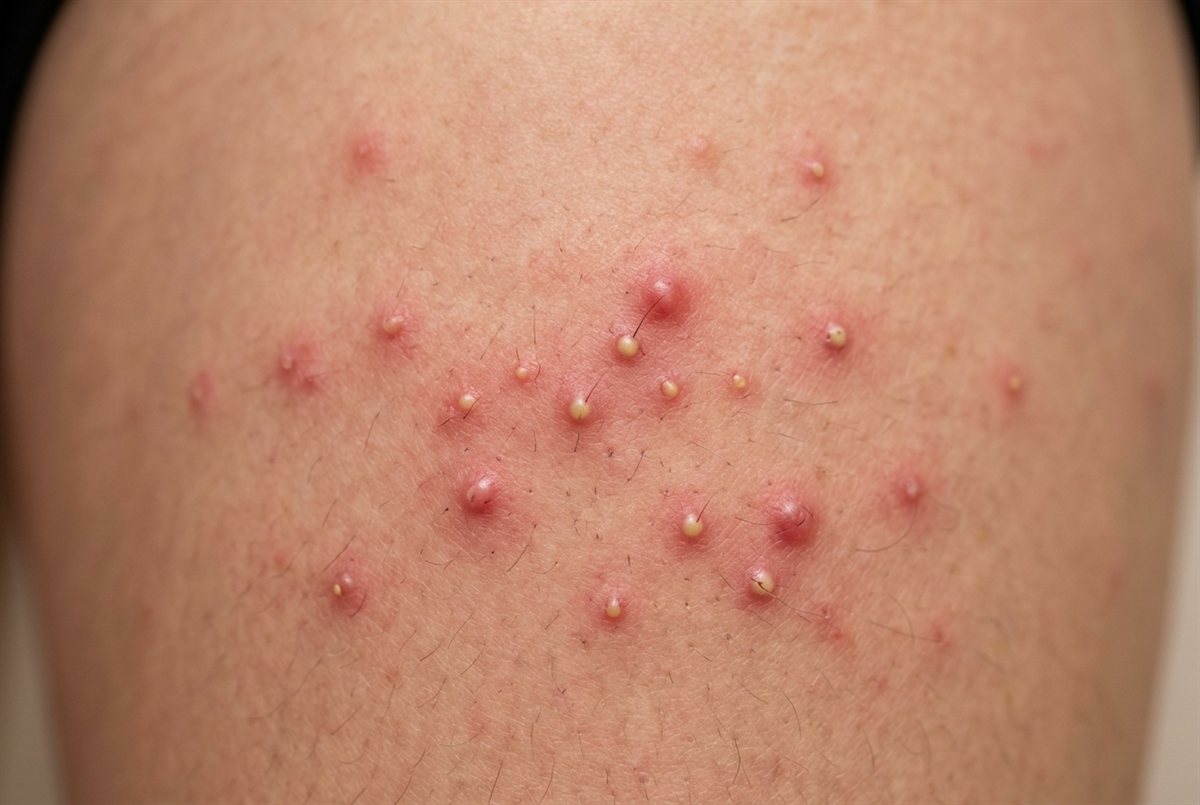
Folliculitis is inflammation of the hair follicles - the tiny pockets each hair grows from. It looks like small red bumps or pus-topped pimples, often with a hair in the center, and can be itchy, tender, or stingy. It shows up anywhere hair grows: the beard and neck, thighs, buttocks, chest, back, and arms. It's very common and usually not serious, but it can be persistent and frustrating.
There are many causes. Often it's bacteria (frequently Staph) getting into follicles irritated by shaving, friction, sweat, or occlusion from tight clothing. 'Hot tub folliculitis' comes from a bacterium in inadequately treated warm water. Shaving can cause razor bumps (irritation and ingrown hairs), and sometimes folliculitis is driven by yeast rather than bacteria - which matters, because that type won't respond to antibiotics. Getting the cause right is the key to clearing it.
Most mild folliculitis settles with simple measures and good skin care. But when it's widespread, painful, recurring, or not improving, a dermatologist can pinpoint what's really going on - including whether it's bacterial, yeast-related, or a look-alike condition - and match the treatment to it. If you've been fighting the same bumps on repeat, that's exactly when a proper diagnosis pays off.
Recurring bumps usually mean the underlying cause hasn't been addressed. Common culprits:
Alongside treatment, small changes make a real difference:
Folliculitis can look like acne or an ingrown-hair problem, and stubborn cases in body folds may overlap with hidradenitis suppurativa - an exam sorts it out.
Signs & symptoms
Small red bumps or pus-topped pimples centered on hair follicles, sometimes with a hair in the middle.
The area may itch, sting, burn, or feel tender.
Beard and neck, thighs, buttocks, chest, back, and arms - anywhere hair grows.
Often flares after shaving or waxing, with ingrown-hair 'razor bumps.'
'Hot tub folliculitis' can appear a day or two after using under-treated warm water.
Tends to appear in clusters and may recur in the same areas.
How we treat it
Treatment starts with identifying the cause - bacterial, yeast, or irritation - because that determines what actually works. From there we tailor a plan to clear it and keep it away.
Determining whether it's bacterial, yeast-driven, or from shaving/friction - sometimes with a quick swab or exam - so we treat the right thing.
Medicated washes and topical antibiotics for mild bacterial folliculitis.
A course of oral antibiotics for more widespread or stubborn bacterial cases.
For yeast-driven (Malassezia) folliculitis, antifungals - not antibiotics - are what clear it.
Guidance on razors, technique, and products to stop razor bumps and ingrown hairs at the source.
A targeted plan for chronic cases - addressing bacterial carriage, friction, and habits - so it stops cycling back.
When to come in
See us if folliculitis is widespread, painful, keeps coming back, or isn't improving with basic care - recurring cases usually mean the underlying cause needs a targeted plan. Come in promptly for a spreading, very tender, or enlarging area, which can signal a deeper infection or a boil.
Schedule with JuniperCommon questions
Folliculitis is inflammation of the hair follicles, and it has several causes. Most often it's bacteria (frequently Staph) entering follicles irritated by shaving, friction, sweat, or tight clothing. 'Hot tub folliculitis' comes from a bacterium in under-treated warm water, and some cases are caused by yeast rather than bacteria. Because the treatment differs by cause, identifying the right one is the most important step.
Mild folliculitis often improves with gentle skin care, a medicated wash, warm compresses, and easing up on shaving or friction. More persistent cases may need topical or oral antibiotics - or, if it's yeast-driven, an antifungal instead. The key is matching treatment to the cause, which is why stubborn or recurring folliculitis is worth having evaluated rather than treated blindly.
Recurring folliculitis usually means the underlying cause hasn't been fully addressed - for example, ongoing razor irritation, friction from tight clothing, an unrecognized yeast-driven type that won't respond to antibiotics, or a persistent bacterial source. A dermatologist can identify the specific driver and build a targeted plan, including prevention, so you're not stuck treating the same bumps over and over.
Most everyday folliculitis isn't considered contagious in the usual sense, but the bacteria involved can spread through shared razors, towels, or hot tubs, and picking can move it to new spots on your own skin. To limit spread, avoid sharing personal items, don't pick at the bumps, and keep the area clean. If bumps appeared after a shared hot tub, mention that - it points to a specific cause.
They can look similar - both cause small bumps - but folliculitis is inflammation or infection of the hair follicle, often with a hair in the center of the bump and frequently linked to shaving, friction, or hot tubs. Acne involves clogged pores with oil and skin cells, plus blackheads and whiteheads. The distinction matters because the treatments differ, and we can tell them apart on exam.
Bend & Redmond · Central Oregon
Board-certified dermatology with same-week appointments — because no one should have to wait for expert care.